Last updated November 18, 2026

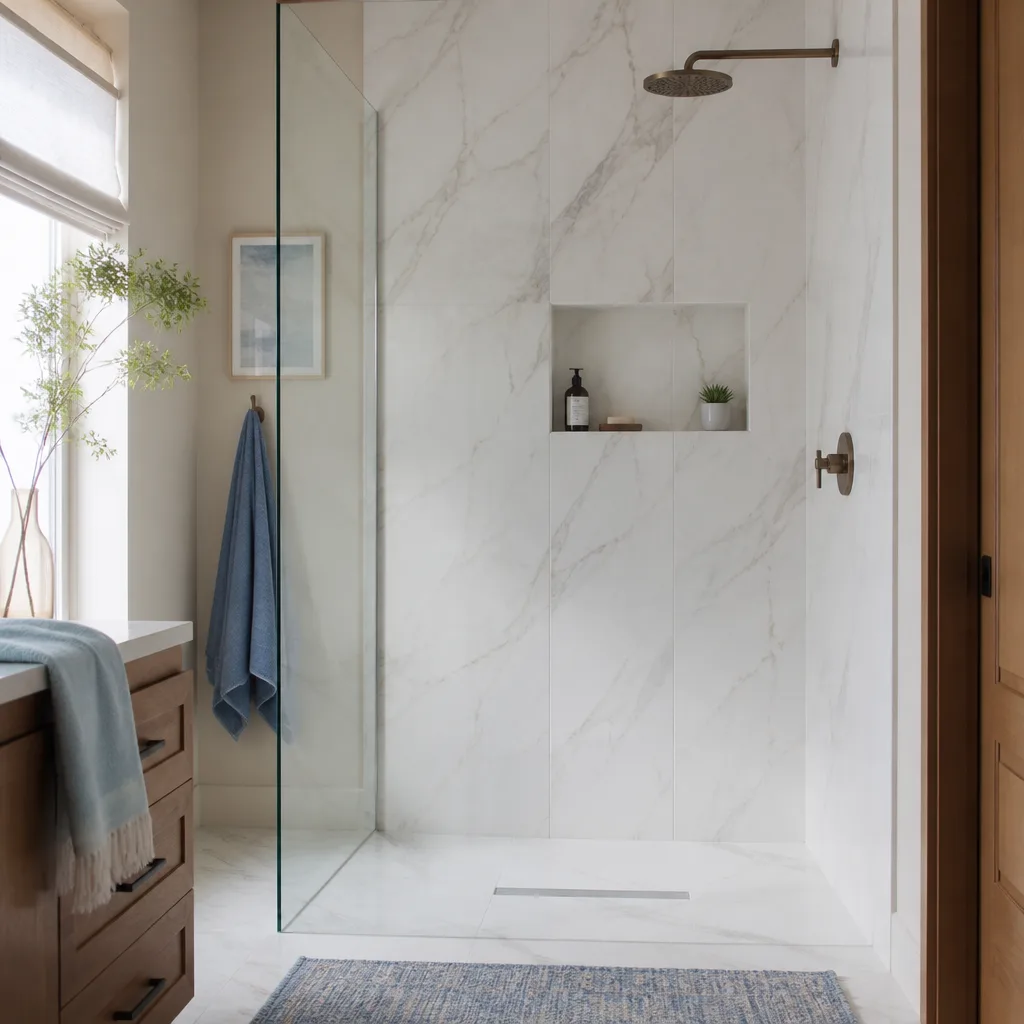






Free in-home design visit - walk-in showers, tub-to-shower conversions, and Kohler, Moen, and Delta fixtures planned to your exact space
Bathroom Remodeling Warning Signs: A Spring Valley Homeowner’s Reference Guide
A soft spot in the floor next to your toilet isn’t a minor annoyance. It’s evidence that the wax ring has been leaking long enough to saturate the subfloor, and in Spring Valley’s concrete slab foundations, that moisture migrates sideways in ways that make the actual damage area far larger than the visible symptom. Most bathrooms in this valley send clear signals long before they fail outright. The trouble is that homeowners don’t know how to read them until someone is already quoting water damage remediation. This guide translates those signals into decisions: what’s cosmetic, what’s structural, and what justifies a full remodel over a patch. You’ll learn what to look for, what it means, and when to stop patching.
Quick Answer
Bathroom remodeling warning signs in Spring Valley fall into four groups: subfloor softness or movement around the toilet and tub, recurring caulk and grout failure that returns within months, hard water staining that won’t lift with normal cleaning, and ventilation that leaves condensation on mirrors and walls after a shower. Any one of these can often be resolved with targeted repair. Two or more together, especially in a bathroom past its second decade, usually mean the problem sits behind the tile and a full remodel is the smarter spend.
Styles & brands we work with
- Walk-in shower
- Tub-to-shower
- Freestanding tub
- Kohler
- Moen
- Delta
- Frameless glass
Table of Contents
- Cosmetic Wear vs. Structural Failure: How to Tell the Difference
- What Spring Valley’s Hard Water Is Telling You About Seal Failure
- Ventilation Warning Signs Most Spring Valley Homes Miss
- Why Caulk Keeps Failing Around Your Tub and Shower
- Subfloor and Slab Signals: The Ones That Cost the Most to Ignore
- When a Dated Bathroom Becomes a Liability, Not Just an Inconvenience
- Accessibility and Safety Thresholds: When Tub-to-Shower Makes Sense
- The Threshold Checklist: Remodel or Repair?
Cosmetic Wear vs. Structural Failure: How to Tell the Difference
The first split in any bathroom assessment is between what sits on the surface and what holds it up. Cosmetic wear is refinishable. Structural failure is not, and no amount of regrouting or recaulking will fix it. Misreading one as the other is the single most common way homeowners waste money on a bathroom that needs more than a touch-up.
Cosmetic conditions include dulled or chipped glaze on old tile, discolored grout lines that are otherwise intact, a dated color palette, and surface scratches on a tub or surround. These can be lived with, refinished, or replaced during a planned remodel when the budget allows. Structural conditions look different. Grout that crumbles out of the joints repeatedly, tile that sounds hollow when tapped, a floor that flexes underfoot near the tub or toilet, and any softness in the subfloor are all signs the problem goes deeper than the finish layer.
Grout is the diagnostic tool most homeowners overlook. A grout line that cracks once and stays repaired is normal movement. A grout line that reappears in the same spot after every repair is telling you the substrate underneath is moving, wet, or both. In our experience working bathrooms across Spring Valley, that pattern almost always traces back to a compromised waterproofing layer or a subfloor that has absorbed moisture over years.
Here’s a simple way to sort what you’re seeing:
- Refinishable: dull tile glaze, stained but intact grout, surface scratches, dated fixtures that function correctly.
- Repairable: isolated cracked tile, a single failed caulk line, a loose fixture that can be reset.
- Structural: repeated grout failure in the same joint, hollow-sounding tile, floor flex or softness, any moisture you can feel or smell.
If more than one structural sign is present, the next conversation shouldn’t be about regrouting. It should be about what’s behind the tile. Proper bathroom remodeling starts with the substrate, not the finish, because that’s where the real decision lives.
What Spring Valley’s Hard Water Is Telling You About Seal Failure
Spring Valley sits in a desert valley with notoriously hard water, and that changes how you should read staining. There’s a meaningful difference between mineral buildup sitting on top of a surface and staining that has worked its way into a failed seal. The two look similar in a photo and mean completely different things.
Surface buildup is white, chalky, and comes off with a mild acid cleaner and some elbow grease. It collects on shower doors, faucet aerators, and tile near the water line. It’s a nuisance, not a warning. Seal failure staining looks different: it tends to be darker, sits in grout lines and along the edges where tile meets tub or floor, and it comes back within weeks of cleaning. That’s because the moisture feeding it is coming from behind the surface, not from the shower spray.
Hard water accelerates the problem in a specific way. Mineral deposits build up in the tiny gaps where caulk and grout have begun to fail, widening them slightly with each wet-dry cycle. Over time those gaps give water a path behind the tile. Spring Valley homeowners often clean aggressively to remove the staining, and aggressive cleaning on failing grout makes the gaps worse. It’s a cycle that reads as a cleaning problem when it’s actually a waterproofing problem.
Here’s how to tell the two apart before you decide on a repair:
- Clean a stained area with a mild acid cleaner and a soft brush. If it lifts and stays gone for a month or more, it was surface buildup.
- Watch the same spot for four to six weeks. If the stain returns in the same pattern, moisture is coming from behind.
- Press a dry paper towel against the grout line. Dampness after a day with no shower use points to a seal failure.
- Tap the tile around the stained area. A hollow sound means the thinset has debonded and water is likely behind it.
When the staining is coming from behind, refinishing or deep cleaning is treating the symptom. The fix is replacing the failed waterproofing layer, and that’s tile-out work. We spec Schluter waterproofing systems on rebuilds precisely because the substrate is where desert bathrooms fail first, and it’s the part nobody sees until it’s a problem.
Ventilation Warning Signs Most Spring Valley Homes Miss
Bathroom exhaust fans in Spring Valley homes are routinely undersized for the square footage they serve. This is one of the quietest warning signs in the house, because a weak fan still makes noise and still moves some air. It just doesn’t move enough. The result is chronic humidity that never fully clears, and that humidity attacks the same substrate and framing that the tile is supposed to protect.
The signs of inadequate ventilation are easy to spot once you know them:
- Mirrors stay fogged for several minutes after a shower, not seconds.
- Walls and ceiling feel damp to the touch well after the bathroom is empty.
- Paint peeling or bubbling on the ceiling above the shower.
- Musty smell that lingers even when the room is clean.
- Mold reappearing in the same corners or along the ceiling line within weeks of cleaning.
- The fan is quiet or barely moves a tissue held to the grille.
Desert climate doesn’t rescue a bathroom from this. Spring Valley’s dry air helps moisture evaporate from surfaces, but it doesn’t pull humidity out of an enclosed room, and it doesn’t dry out a wall cavity that’s already wet behind the tile. A fan that’s too small for the room leaves moisture in the air long enough to be absorbed by grout, caulk, and drywall. That’s a slow process, and it’s why ventilation problems show up as remodeling problems a few years later.
Homeowners planning a remodel have an advantage here: the fan and ductwork can be replaced and correctly sized while the ceiling is open. If your current fan is loud, weak, or old enough that you can’t remember when it was installed, plan to address it during the project rather than after. A fan rated for the room’s actual size is a small line item that protects everything around it.
Why Caulk Keeps Failing Around Your Tub and Shower
Recurring caulk failure around a tub or shower is the most misread warning sign in the bathroom. Homeowners see moldy caulk, cut it out, apply new caulk, and repeat the process every six to twelve months. The caulk isn’t the problem. It’s the messenger. Caulk fails repeatedly when the substrate behind the tile is moving, wet, or both, and no caulk on the market will hold against that.
There are two failure patterns to distinguish. The first is simple adhesive failure: the caulk pulls away cleanly from one surface, usually because the joint wasn’t dry or clean when it was applied. That’s a technique issue and it’s fixable. The second is what we call wet-joint failure: the caulk molds from behind, bulges, or peels away with a damp surface underneath. That pattern points to moisture in the wall or under the tub deck, and it means the waterproofing layer has been compromised.
In Spring Valley’s slab-foundation homes, wet-joint caulk failure often pairs with something else: a soft or discolored spot on the drywall or baseboard on the opposite side of the wall. That’s the moisture finding its exit path. When you see both, the repair isn’t caulk. It’s opening the wall and rebuilding the waterproofing behind the tile.
There’s a middle scenario worth knowing about. Sometimes caulk fails in one spot repeatedly because the tub or shower pan has settled slightly, opening a joint that should be stable. That’s a substrate issue but a smaller one, and it can sometimes be resolved by resetting the pan or reinforcing the subfloor. A proper assessment tells you which of the three you’re dealing with, and that assessment is exactly what a bathroom specialist does before quoting anything.
Subfloor and Slab Signals: The Ones That Cost the Most to Ignore
Subfloor and slab signals are the most expensive warnings to miss because the damage runs ahead of the visible symptom. Spring Valley homes sit on concrete slabs, and water behaves differently on a slab than it does over a framed crawlspace. It doesn’t drain away. It spreads laterally under the flooring, following the path of least resistance, until it reaches something that shows it.
What that means in practice: a wax ring that’s been leaking for a while can saturate an area several times the size of the visible stain. The soft spot next to the toilet is where the moisture finally reached the surface. The damage underneath extends outward from there, sometimes under the adjacent flooring and into the wall base. By the time the soft spot appears, the repair has already grown.
Here are the signals to act on immediately:
- Softness near the toilet base. Press firmly on the floor on both sides of the toilet. Any give, sponginess, or flex is a wax ring failure in progress until proven otherwise.
- Movement when you step out of the tub or shower. Flex in the floor around a wet area points to a subfloor that’s been compromised.
- Loose or rocking toilet. A toilet that rocks is a toilet that’s leaking. The wax seal breaks as soon as the base moves.
- Discoloration on the flooring near the tub or toilet. Darkening, curling at edges, or stain patterns that grow point to moisture underneath.
- Musty smell that never goes away. Persistent smell in a bathroom is a sign of ongoing moisture, not a cleaning issue.
Any one of these is worth a professional look. Two or more together means the bathroom needs to be opened up and rebuilt from the substrate, not patched. In our experience, slab-foundation bathrooms that show these signs together always need more substrate work than the homeowner expected, and the only way to know the real scope is to see what’s under the tile.
When a Dated Bathroom Becomes a Liability, Not Just an Inconvenience
A dated bathroom is an aesthetic inconvenience. A bathroom that’s unsafe, unsanitary, or actively degrading is a liability, and the line between them is clearer than most homeowners realize. If your bathroom sits on the liability side, spot repairs stop being a sensible strategy, because you’re spending money on the surface of a problem that’s underneath it.
Here are the thresholds that tip a bathroom from dated to liability:
- Water damage is present or suspected behind tile, under flooring, or around the toilet. Ongoing moisture in a slab home spreads and gets more expensive the longer it sits.
- Mold has appeared more than once after cleaning. Repeat mold is a moisture problem, not a cleaning problem.
- The bathroom can’t be made safe for the people using it. A high tub wall for someone with mobility concerns, a slippery floor, or no grab bar provisions all qualify.
- Fixtures are failing in ways that affect function. A toilet that rocks, a shower valve that won’t hold temperature, or a tub that’s cracking are all functional failures, not cosmetic ones.
- The bathroom is the only one in the home, and it’s degrading. When there’s no second bathroom to use while the first is repaired, a properly planned remodel is far less disruptive than a series of emergency patches.
When you’re past two or three of those thresholds in the same bathroom, a full remodel is usually the better spend. Not because remodeling is fun, but because repairing the surface of an active problem leaves the problem in place. A bathroom specialist who works in Spring Valley every day can tell you honestly which side of the line your bathroom sits on, and that’s the most useful conversation you can have before you commit to a budget.
If you’re weighing a full rebuild against a targeted repair, our bathroom remodeling Spring Valley page lays out what a full-scope project involves. It’s worth reading before you decide.
Accessibility and Safety Thresholds: When Tub-to-Shower Makes Sense
Some warning signs aren’t about water at all. They’re about the people using the bathroom. A high tub wall, a slippery floor, and nothing to hold onto turn a normal bathroom into a hazard as mobility changes. This is where a walk in shower conversion stops being a design upgrade and starts being the right safety decision.
Signs that a tub-to-shower conversion makes more sense than a tub repair:
- Anyone in the household struggles to step over the tub wall, or grips the wall while doing it.
- The tub is being used primarily for showers, and the tub exists only because it was there when the bathroom was built.
- The bathroom is the primary one in the home, so it has to serve the household for the long term.
- The tub is in a failing condition anyway, so replacement is already on the list.
Aging-in-place planning is a big part of what we do in Spring Valley, and it’s usually a conversation between the homeowner and an adult child helping plan ahead. The conversion work is the same either way: remove the tub, rebuild the substrate and waterproofing, install a low-threshold shower base, and finish the walls and floor. Schluter waterproofing under the new shower floor is the detail that separates a walk-in that lasts from one that leaks within a few years.
The fixtures deserve real thought too. Sterling and American Standard both make accessible shower systems and grab bar provisions that hold up to daily use. Toto and Grohe offer premium valve and trim options for households that want a design-forward finish alongside the safety features. A bathroom specialist can spec any of those to your budget and space, which is one reason working with a dedicated bathroom remodeler instead of a general contractor pays off here.
The Threshold Checklist: Remodel or Repair?
Every homeowner wants the same answer to the same question: is this a repair or a remodel? The honest answer is that it depends on how many of these signals you have stacked together. One signal, addressed early, is usually a repair. Two or three of them in the same bathroom, especially in a Spring Valley home of any age, usually point to a remodel. Here’s the checklist we walk through before quoting anything.
- Is there softness or flex anywhere near a wet fixture? Yes means the substrate is compromised and surface repairs won’t hold.
- Has any repair failed twice in the same spot? The second failure is the message that the first one missed.
- Does moisture or odor persist after cleaning and drying? Ongoing moisture means an active leak source behind the finish layer.
- Is the ventilation undersized for the room? Address it during the remodel when the ceiling is open.
- Is anyone in the household at risk from the current layout? A high tub wall and a slippery floor are real hazards, not aesthetic complaints.
- Are multiple fixtures failing at the same time? Simultaneous failure usually means the bathroom as a system is done, not one component.
- Is this the only bathroom in the home? Planned work is far less disruptive than an emergency rebuild, and it can be scheduled around your household.
One or two “yes” answers is a targeted repair conversation. Three or more tips it toward a full remodel, and the math usually works out because you’re not paying twice for the same substrate. A proper free estimate starts with looking at what’s actually behind the tile, not just the surface symptoms.
Common Mistakes to Avoid
- Recaulking the same joint a third time. Once or twice is normal maintenance. A third failure means the problem is behind the tile, and more caulk just delays the real repair.
- Cleaning failing grout aggressively. Spring Valley’s hard water makes staining tempting to attack with stiff brushes and stronger cleaners, but that widens the failing joints and lets in more moisture.
- Ignoring a rocking toilet. A toilet that moves is breaking its wax seal every time it rocks. That seal failure tracks moisture under the flooring and into the slab.
- Treating an undersized fan as background noise. Weak ventilation leaves humidity in the room long enough to soak grout, caulk, and drywall. It’s one of the cheapest fixes and one of the most expensive ones to skip.
- Assuming “dry climate” means “dry bathroom.” Spring Valley’s desert air doesn’t dry out a wall cavity that’s already wet. It only dries the surface, which hides the problem.
- Choosing a remodeler who works on everything. Bathrooms have their own substrate, waterproofing, and ventilation requirements. A general contractor who touches bathrooms occasionally will treat it as a sub-trade job.
- Buying fixtures before the assessment. Fixture selection depends on what’s behind the wall and the actual layout. Choosing an American Standard or a Toto first, before anyone has looked at the substrate, locks you into the wrong plan.
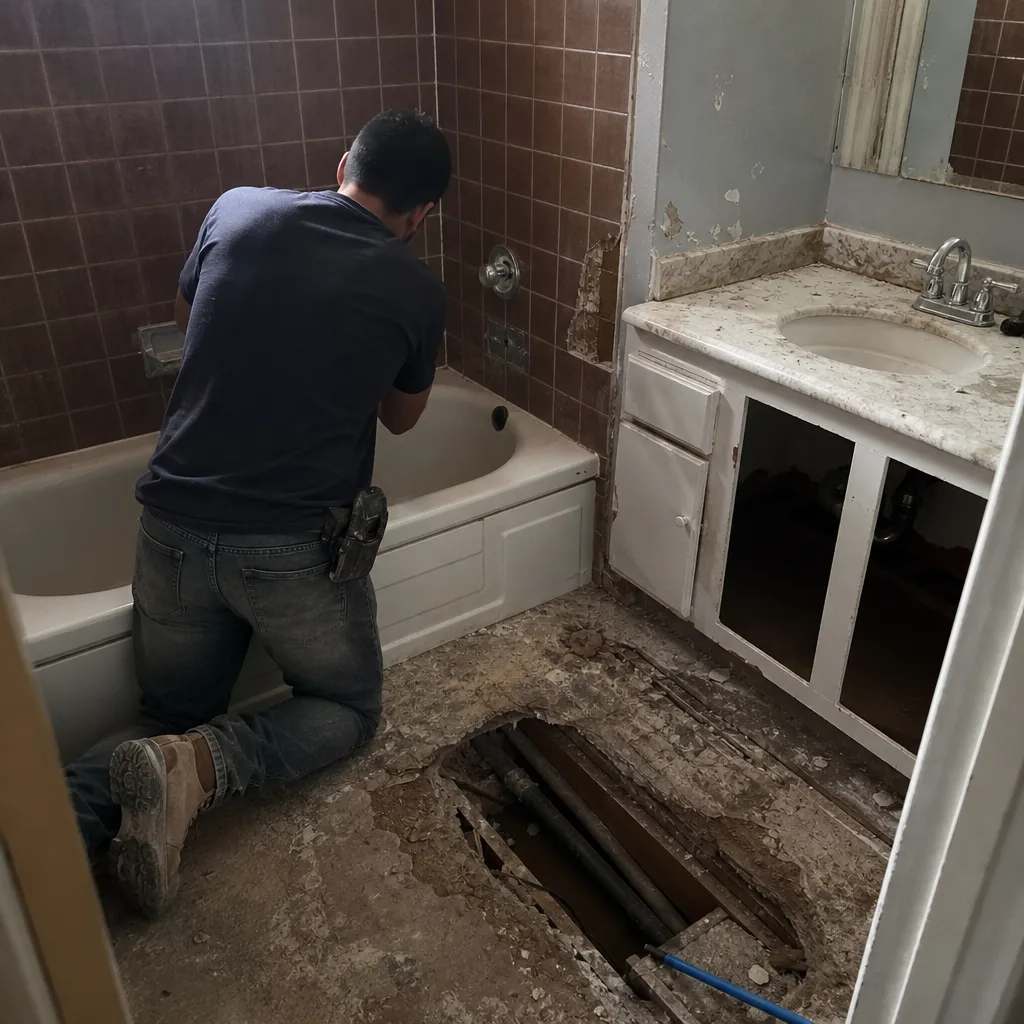
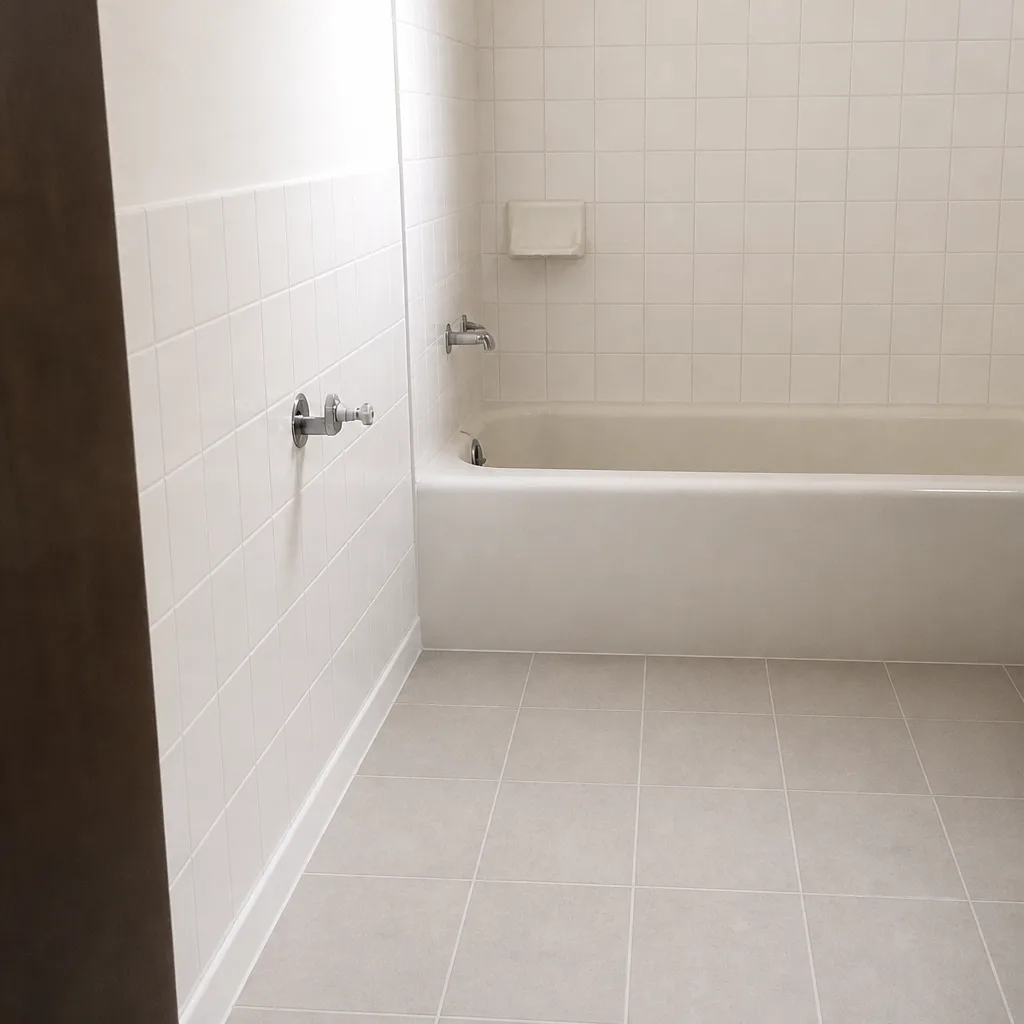
See the difference
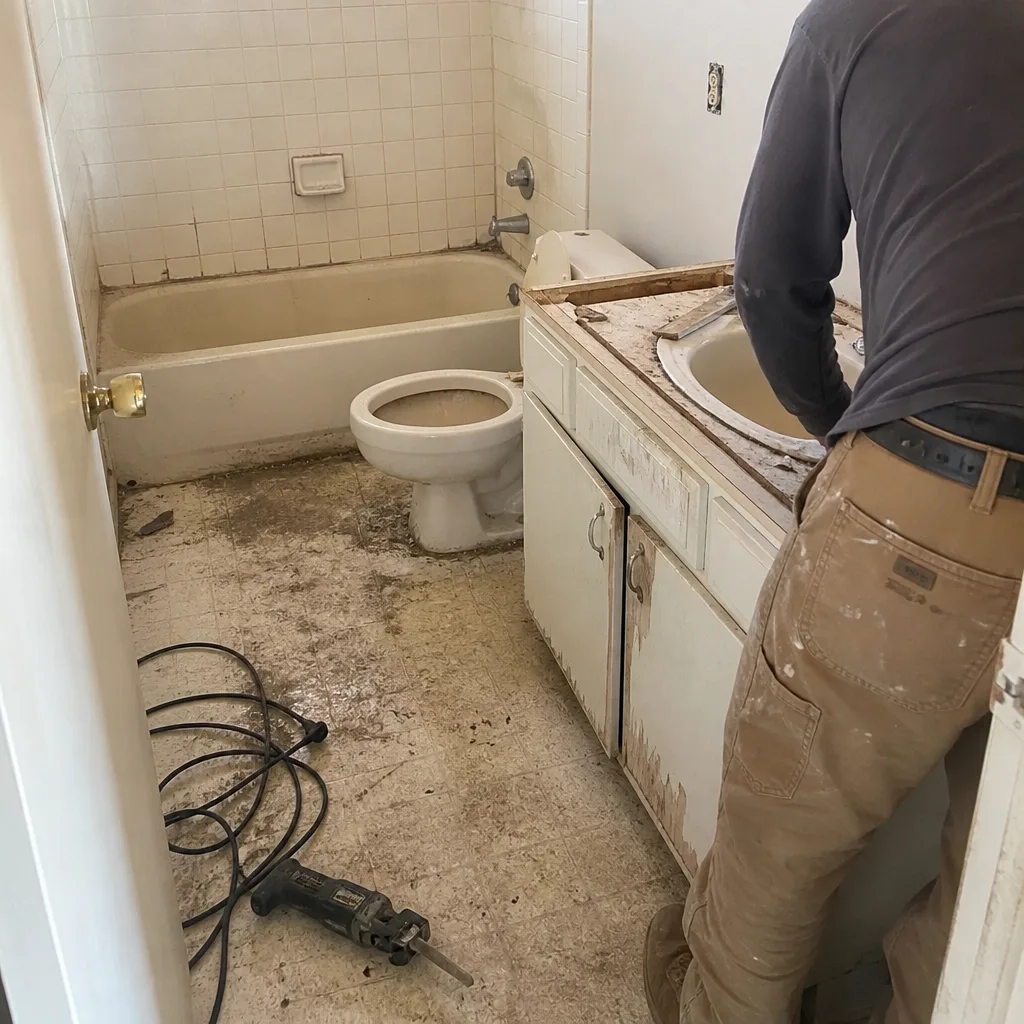 Before
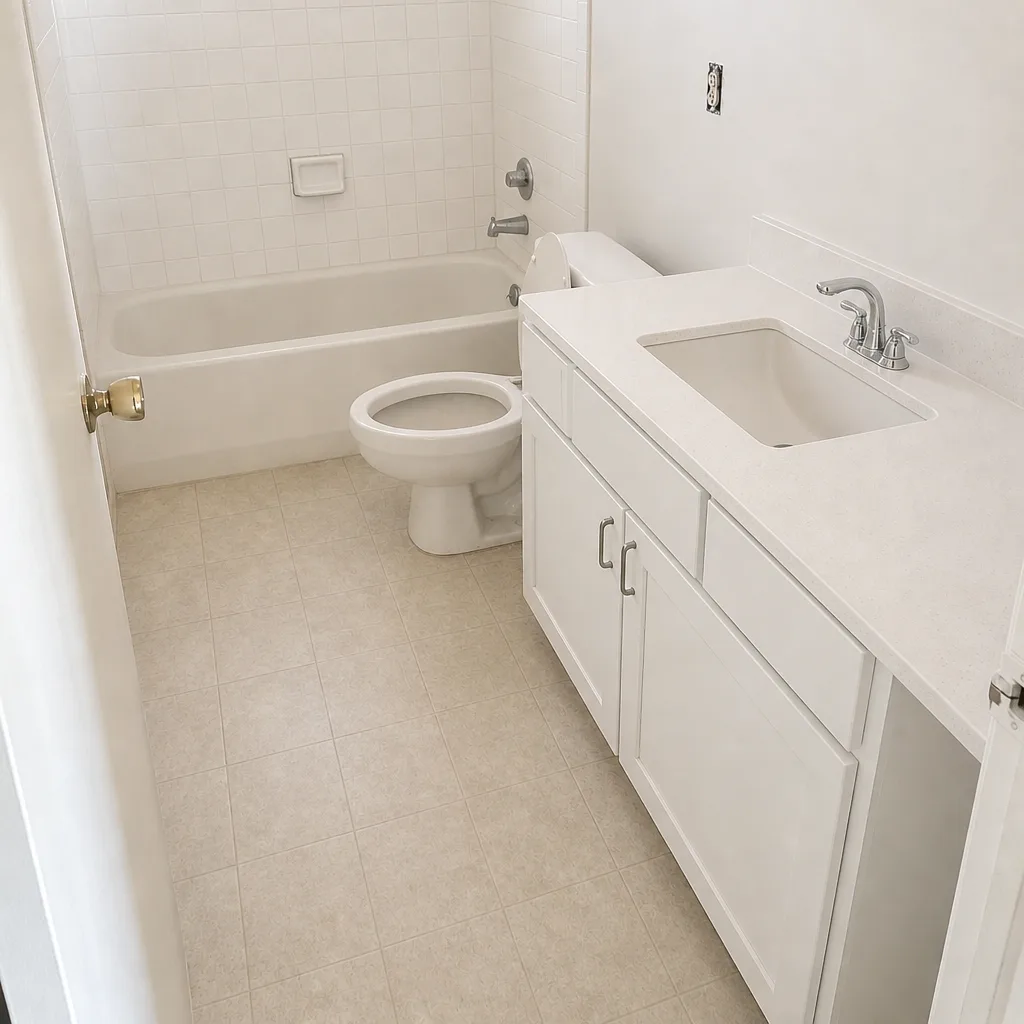 After
 Before
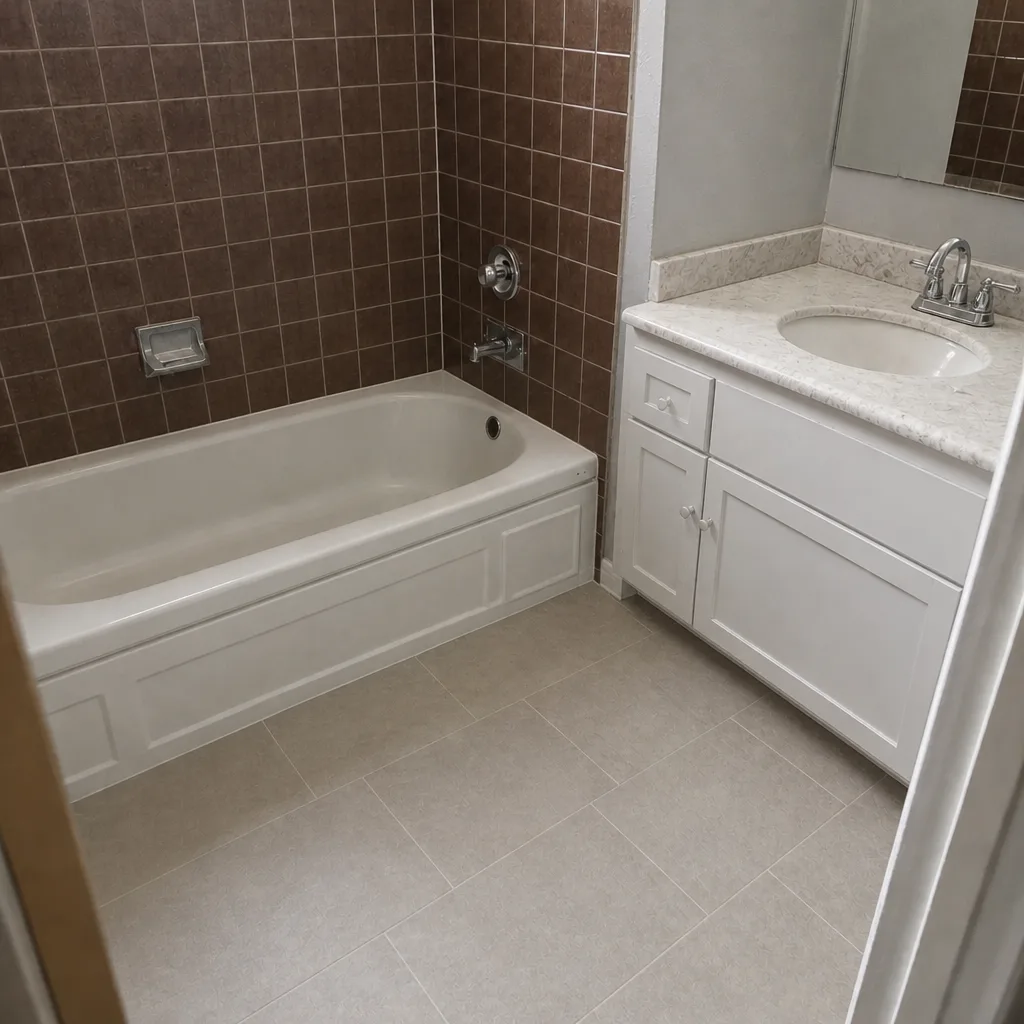 After
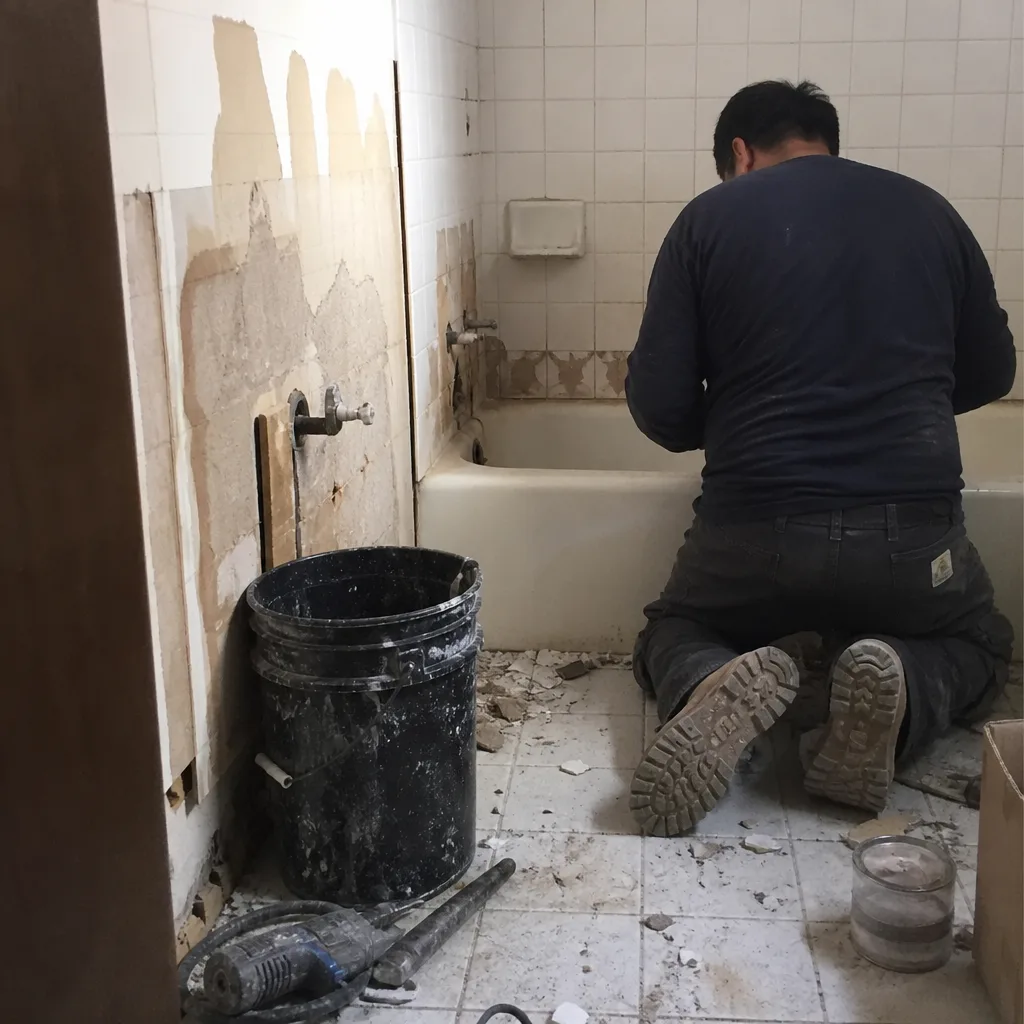 Before
 After
When to Call a Professional
Call a professional when any warning sign on this list shows up alongside another, when a repair has failed in the same location more than once, when you can feel softness or movement near a wet fixture, or when the person using the bathroom is at risk from the current layout. That’s the point where surface repairs stop being a sound investment and a proper assessment saves you money. Bathroom specialists work on substrates and waterproofing every day, so they see the pattern behind the symptom faster than a general contractor who touches bathrooms occasionally. Our technicians have up to 10 years of experience, and we spec Schluter waterproofing on rebuilds because the substrate is where Spring Valley bathrooms fail first. Bathroom Remodeling Spring Valley offers free estimates in Spring Valley. Call (844) 312-0122. We answer 24/7. Fast dispatch from 7am to 7pm, Sunday through Friday.
Frequently Asked Questions
If you have one warning sign in an otherwise stable bathroom, a repair is usually the right call. If you have two or three signs at once, especially softness near a wet fixture, repeated caulk or grout failure in the same spot, or moisture that returns after cleaning, a full remodel is usually the better spend because you’re addressing the cause instead of the surface. A free estimate that starts with looking behind the tile is the only way to know for sure. Call (844) 312-0122 for an honest assessment.
Recurring caulk failure means the substrate behind the tile is moving or wet, and no caulk will hold against that. Spring Valley’s slab foundations and hard water accelerate the pattern: moisture gets behind the failing joint, migrates under the flooring, and returns to the same spot. The fix is repairing the waterproofing behind the tile, not reapplying caulk. A bathroom specialist can tell you which pattern you have with a short visit and a moisture check. Call (844) 312-0122 to schedule a free estimate.
Hard water staining means two different things depending on whether it comes back after cleaning. White chalky buildup that lifts with a mild acid cleaner and stays gone is cosmetic and doesn’t indicate a problem. Darker staining in grout lines and along tile edges that returns within weeks points to moisture coming from behind the tile, which means the waterproofing layer has been compromised. Cleaning aggressively makes the second one worse. Call (844) 312-0122 if your staining keeps coming back.
A soft spot next to the toilet usually traces back to a wax ring failure that’s been leaking long enough to saturate the subfloor, but not always. In Spring Valley’s slab homes, the moisture often starts at the toilet and spreads laterally under the flooring, so what you feel next to the toilet may be the edge of a larger wet area. A rocking toilet is the clearest confirmation. Any softness near a wet fixture deserves a professional look before you patch. Call (844) 312-0122 for a free estimate.
Spring Valley’s desert climate has two effects on bathrooms. Hard water accelerates mineral buildup in failing joints and widens them slightly with each wet-dry cycle. And the dry air, which homeowners count on to dry things out, only dries the surface. It doesn’t dry out a wall cavity that’s already holding moisture, and it doesn’t pull humidity out of a room with an undersized fan. That combination means Spring Valley bathrooms tend to fail from the substrate out, not the surface in. Call (844) 312-0122 to talk through what you’re seeing.
For a bathroom remodel, a bathroom specialist is the better choice because the work concentrates on substrate, waterproofing, ventilation, and fixture specification, all of which are bathroom-specific trades. A general contractor who occasionally takes a bathroom rebuilds it as a side job with unfamiliar suppliers. We work with Kohler, Moen, Delta, American Standard, Toto, Grohe, Schluter, and Sterling, so the fixtures match your space and budget rather than whatever happens to be on hand. Call (844) 312-0122 for a free estimate.
The Bottom Line
Most bathrooms in Spring Valley give you plenty of warning before they fail. Softness near a wet fixture, caulk that fails the same joint repeatedly, hard water staining that returns after cleaning, and an undersized fan are all messages that something underneath the surface needs attention. One of those signals is usually a repair. Two or three together, especially in a slab-foundation home past its second decade, point to a remodel that starts with the substrate and gets the waterproofing right. Read the signals early and you spend less, not more. Ignore them and you end up paying twice.
If you’re not sure which side of the line your bathroom sits on, the fastest way to find out is a free estimate from a dedicated bathroom remodeler. Call (844) 312-0122. We answer 24/7. Fast dispatch from 7am to 7pm, Sunday through Friday. Every quote is written line-item, the price is set per job by the written estimate, and we work with your choice of fixtures across eight brands. Let’s look at what’s really going on behind the tile before you commit to a budget.
Written by the team at Bathroom Remodeling Spring Valley.