Last updated November 18, 2026
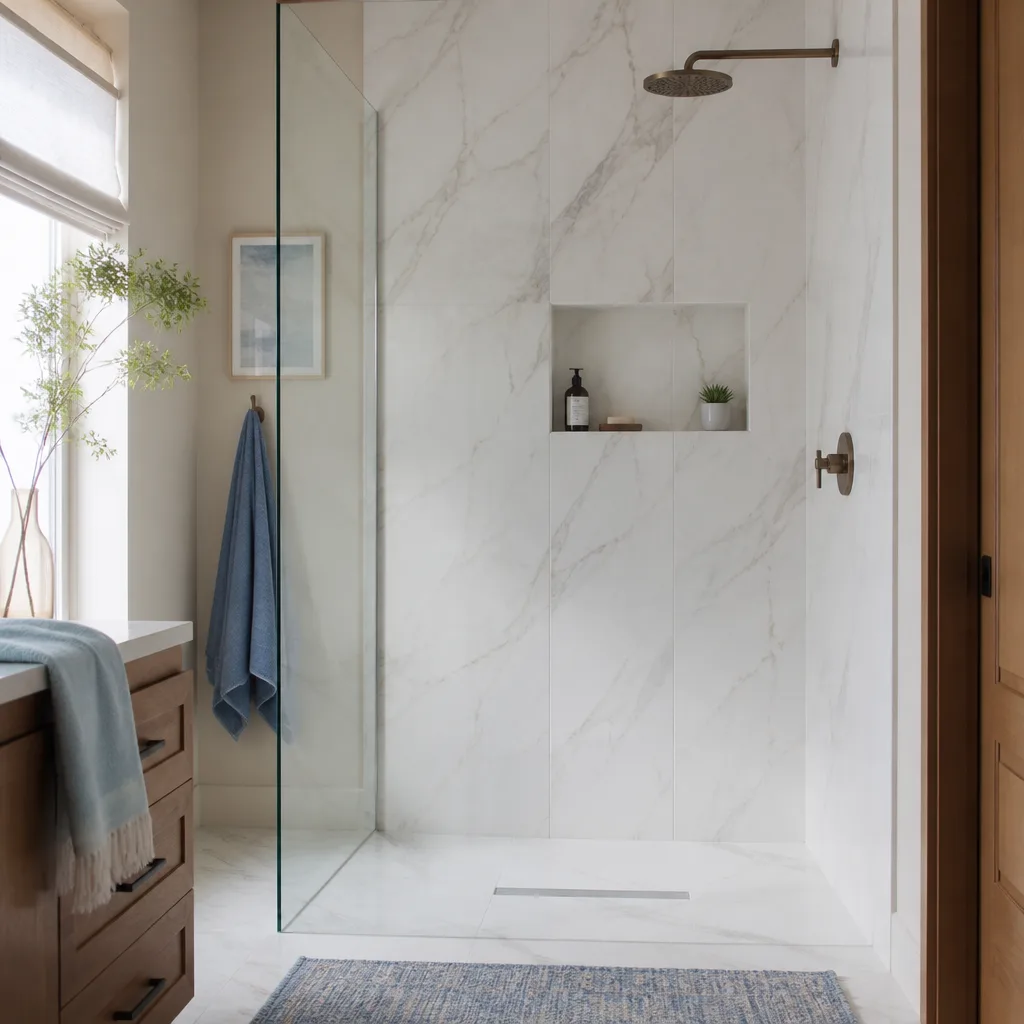







Free in-home design visit - walk-in showers, tub-to-shower conversions, and Kohler, Moen, and Delta fixtures planned to your exact space
Seasonal Bathroom Remodeling Care for Spring Valley: Year-Round Homeowner’s Guide
Most homeowners here think of bathroom care as a spring cleaning item – scrub the grout, wipe the glass, done. But Spring Valley doesn’t run on four seasons. It runs on two: a long, brutal summer that pushes outdoor temperatures past 115°F and keeps the air conditioning cycling almost without pause, and a mild window in between when smart maintenance actually decides how well your bathroom survives the next heat wave. That constant AC cycling is the hidden stressor. Indoor humidity swings hard enough to open grout joints, curl caulk edges, and work loose the sealant around a shower enclosure in a single season. This guide walks you through the seasonal maintenance that protects the materials in your Spring Valley bathroom, and it tells you when a repair is the smarter move than another patch.
Quick Answer
Seasonal bathroom care in Spring Valley means two focused maintenance passes a year: a pre-summer inspection of grout, caulk, sealant, ventilation and finish, done before the extreme heat and hard AC cycling arrive, and a fall re-caulking and re-sealing window that closes before the mild season ends. Cleaning frequency also needs to rise in summer, because faster evaporation leaves hard water scale behind more quickly. The rest of the year is routine care, and any failure that reaches the waterproofing layer is a job for a professional, not a tube of caulk.
Styles & brands we work with
- Walk-in shower
- Tub-to-shower
- Freestanding tub
- Kohler
- Moen
- Delta
- Frameless glass
Table of Contents
- Why Spring Valley Bathrooms Age Differently
- The Pre-Summer Inspection Checklist
- Managing Bathroom Ventilation in Summer vs. Winter
- The Fall Re-Caulking and Re-Sealing Window
- Hard Water Scale and Summer Cleaning Frequency
- Fixture Finish Care by Season
- Repair, Refresh, or Remodel? The Seasonal Decision
- Common Mistakes to Avoid
Why Spring Valley Bathrooms Age Differently
In most of the country, a bathroom deals with moisture from inside and moderate temperature outside. In Spring Valley, the two forces come from opposite directions. Outside, dry desert heat and intense sun pressure the building envelope. Inside, the air conditioning pulls moisture out of the air so aggressively that the room can feel dry while your shower is still drying out behind a closed door. That gap is what ages bathroom materials faster than homeowners expect.
Three things happen in this cycle:
- Expansion and contraction. Materials expand in warmth and pull back as the AC cools the room. Sealant and grout take the movement first, which is why hairline cracks appear in places you never touched.
- Fast evaporation. Water left on tile, stone and glass evaporates quickly, and whatever minerals it carried stay behind as scale. That buildup is a summer problem more than a winter one.
- Trapped humidity. A shower with weak ventilation holds moisture against caulk and grout even while the rest of the house feels dry. The bathroom stays wet longer than the air around it.
None of this means a Spring Valley bathroom is doomed to fail early. It means the maintenance calendar has to match the actual climate, not a generic national checklist. A bathroom that gets two well-timed passes a year holds up far better than one that gets a single deep clean and nothing else. This is the same reasoning we apply when planning a bathroom remodeling project here: the materials and waterproofing decisions have to account for how this climate actually behaves.
The Pre-Summer Inspection Checklist
The most valuable hour you’ll spend on your bathroom all year happens in the weeks before the heat arrives. A pre-summer inspection catches the small failures that extreme temperatures and aggressive AC cycling would otherwise turn into expensive ones. Work through this list methodically.
- Walk the grout with a fingernail or a plastic card. Any joint that gives, crumbles, or has a visible hairline gap needs attention before the expansion cycle stresses it further.
- Press every caulk line. Around the tub edge, the shower base, the sink backsplash and any inside corners. Caulk that has lost adhesion will feel soft or lift under light pressure.
- Check the shower enclosure seals. The sealant around the glass panels and door is the first line of defense against water reaching the framing. Look for curling edges and any gap at the bottom sweep.
- Test the exhaust fan by feel and by sound. Hold a tissue against the grille; if it doesn’t pull, the fan or duct is failing. A weak fan is a year-round moisture problem that gets worse in summer.
- Inspect the tile for hollow spots. Tap across the floor and walls with a plastic screwdriver handle. A dull, hollow sound over a patch of tile can signal adhesion that’s breaking down.
- Look up and look down. Water staining on the ceiling below, or soft spots on a baseboard, point to a leak that has already traveled.
- Check window and skylight seals if your bathroom has them, since UV exposure through glass is strongest in the pre-summer weeks.
Anything on that list that shows water damage behind the surface, or movement in the substrate, is worth having looked at by a professional before the heat locks in. Caulk and grout can be refreshed by a careful homeowner; a failing shower pan or a loose tile field cannot.
Managing Bathroom Ventilation in Summer vs. Winter
Ventilation in a desert climate works opposite to how most people assume. In a humid climate, you ventilate to push moisture out. In Spring Valley, the indoor air is often drier than the outdoor air in winter, and the outdoor air is dry and hot in summer. That changes how you run the fan.
Summer ventilation
- Run the exhaust fan for a full 20 minutes after the shower, not just while you’re in it. The room needs to shed the humidity from the enclosure, not the air temperature.
- Leave the bathroom door cracked while the fan runs, so replacement air can enter. A fan pulling against a sealed room does very little.
- Wipe glass and tile down after the last shower of the day. In summer the surfaces dry fast, and a quick wipe removes the water before it can deposit minerals.
- Keep the AC vents in or near the bathroom unobstructed. A blocked register turns the room into a pocket of trapped humidity while the rest of the house stays cool.
Winter ventilation
- The fan still runs after showers, but a shorter cycle is usually enough because the cooler air holds less moisture.
- Watch for condensation on the mirror and windows. If it’s heavy in winter, the fan is underperforming or the duct is restricted.
- Don’t close the bathroom off entirely for warmth. A sealed, warm bathroom with a running shower is exactly where mold likes to start.
If your fan is old, noisy, or moves very little air, replacing it at the pre-summer stage is one of the highest-value seasonal improvements you can make. A walk in shower with a large open footprint puts even more moisture into the air at once, so ventilation matters more, not less.
The Fall Re-Caulking and Re-Sealing Window
Fall is the maintenance window that most Spring Valley homeowners skip, and it’s the one that protects the bathroom through the next summer. Once the peak heat has passed and before the mild season closes, joint sealant and stone sealer should be refreshed. Sealant degrades under UV exposure, thermal movement and repeated wet-dry cycles, and by fall it has taken a full year of all three.
Here’s the sequence that works:
- Remove the old caulk completely. A sealant applied over failing caulk fails on the same schedule. Cut and peel the old bead out of the joint.
- Clean and dry the joint. Any residue, soap film or moisture stops the new bead from bonding.
- Re-caulk with a bathroom-grade sealant suited to the joint – silicone for wet areas and movement joints, a paintable sealant where you need to match grout color.
- Re-seal natural stone and porous tile if your bathroom has them. A penetrating sealer slows the mineral absorption that drives staining.
- Refresh grout where it’s started to pit. Grout that has lost its surface holds water against the substrate.
Do this in the fall and the joints enter summer already protected, which is the difference between a maintenance pass and a repair. If the joint behind the caulk is soft, wet or crumbling, the problem is under the surface and sealant won’t fix it. That’s when a specialist needs to look at the waterproofing layer.
Hard Water Scale and Summer Cleaning Frequency
Hard water scale accelerates in summer, and the reason is simple physics. Higher temperatures speed evaporation, and faster evaporation leaves the dissolved minerals behind on the surface sooner. A shower that leaves a light film in the cooler months can leave a visible, crusty ring in the peak summer weeks.
Practical adjustments for the summer months:
- Increase wipe-down frequency. A quick squeegee or towel pass after every shower is the single most effective defense against scale, and it costs nothing.
- Soak the showerhead and aerators. Mineral buildup there narrows the flow, which you’ll notice as a weaker shower rather than a leak.
- Clean glass more often, with the right product. A mild acidic bathroom cleaner and a soft cloth handle scale on glass and glazed tile. Avoid abrasive pads, which dull the surface and make scale stick faster next time.
- Watch the grout lines and the base edges. Scale settles in the low spots first, so those are the areas to check on a weekly basis in summer.
If you have a whole-house water softener, this is the season to make sure it’s running properly. If you don’t, more frequent cleaning is the realistic answer, and it’s a big part of why matte and brushed finishes are popular in this market: they hide light scale far better than polished chrome does.
Fixture Finish Care by Season
Fixture finishes age on a different clock than tile and grout, and the season drives how. The two forces to manage are UV exposure through any bathroom window, and the cleaning products that either protect or attack the surface.
Matte and brushed finishes
Matte black, brushed nickel, brushed gold and gunmetal have become common in Spring Valley bathrooms for good reason: they hide water spots and scale. They need care on their own terms. Use a soft microfiber cloth and a pH-neutral cleaner. Avoid abrasive powders and pads, which leave dull patches that no polish can bring back. If your bathroom has a window, the finish on the side that gets direct sun will weather faster than the rest, so rotate which surfaces you clean first and keep the window shaded with a blind or film during peak sun.
Polished chrome and stainless
Bright finishes show every spot, so they need more frequent wiping in summer when evaporation leaves minerals faster. A dry microfiber pass after each use and a light cleaner once a week is enough.
Choosing finishes that age well here
When we plan a bathroom in Spring Valley, we steer homeowners toward finishes that suit the climate and the cleaning reality, not just the showroom photo. Brands like Kohler, Moen, Delta and American Standard all offer finishes across the range, and the finish you pick should match how much upkeep you’ll actually do. A finish you’re going to clean three times a week is a better choice than one you love but won’t maintain.
Repair, Refresh, or Remodel? The Seasonal Decision
Sooner or later, maintenance stops being enough. The judgment call is whether the bathroom needs a repair, a surface refresh, or a full remodel. Here’s how to think about it:
- Repair when the issue is contained – a failed caulk line, a clogged fan duct, a single loose tile. Fix it, and keep up the seasonal passes.
- Refresh when the surfaces are tired but the bones are sound – re-grout, re-caulk, replace a dated faucet, update a light fixture. This is the value play if the layout works and the waterproofing is intact.
- Remodel when water has reached the substrate, when the layout no longer fits how you use the room, or when a bath you can’t safely step into is becoming a daily hazard. That last one is the most common trigger we see in Spring Valley, and it’s the reason tub-to-shower conversion has become a core part of what we do.
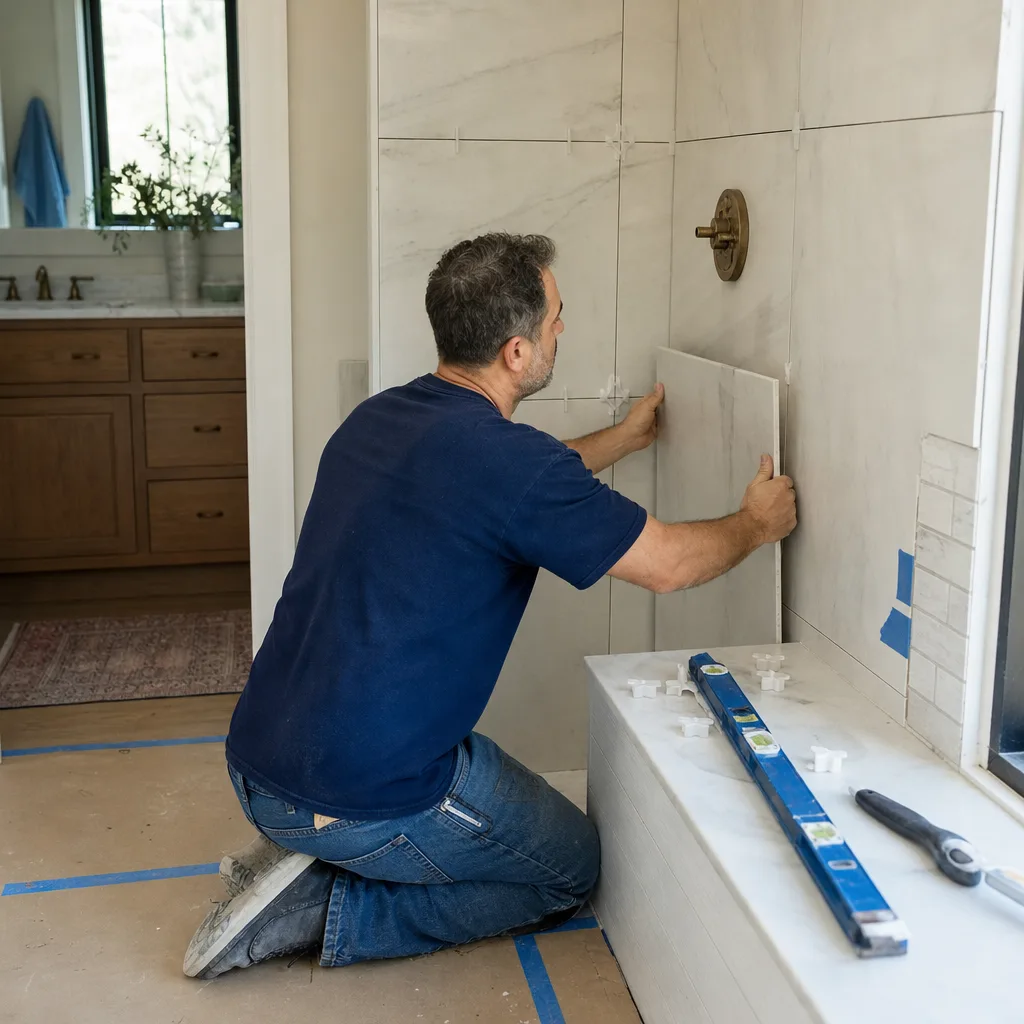
The most important technical detail in a remodel is the one most homeowners never see: what’s behind the tile. Proper waterproofing is what lets a bathroom survive decades of this climate. Schluter Systems waterproofing is our standard because it forms a continuous, bonded layer behind the tile rather than relying on surface sealant alone. A remodel that skips that step looks fine on day one and fails years later, and it’s the difference between a bathroom that lasts and one you’re reopening in a season or two. If you’re weighing a full overhaul, that’s the work we do under one roof as a Bathroom Remodeling Spring Valley specialist.
Common Mistakes to Avoid
- Treating Spring Valley like a four-season climate. A maintenance calendar built for a wet, mild region skips the pre-summer pass and the fall re-seal that actually matter here. Schedule your maintenance around the heat, not the calendar quarter.
- Caulking over failing caulk. Layering new sealant over old is a wasted afternoon. The bond follows the old bead and fails within a season.
- Ignoring the exhaust fan until it dies. A weak fan quietly holds moisture against grout and sealant all year. Test it in the spring, and replace it when it underperforms rather than waiting for it to stop entirely.
- Using harsh cleaners on matte and brushed finishes. Abrasive pads and powders dull these finishes permanently. A neutral cleaner and a soft cloth protect the finish you paid for.
- Cleaning only in the cooler months. Scale builds fastest during summer evaporation, so cleaning frequency should go up, not down, in the heat.
- Assuming a leak is a caulk problem. Water that reaches the substrate behind a shower usually signals failing waterproofing, not a worn bead. Sealant can’t fix a layer that’s already failed.
- Remodeling without proper waterproofing. A beautiful tile job over an inadequate substrate is a future problem. If a contractor skips the waterproofing detail, that’s the sign to ask harder questions.
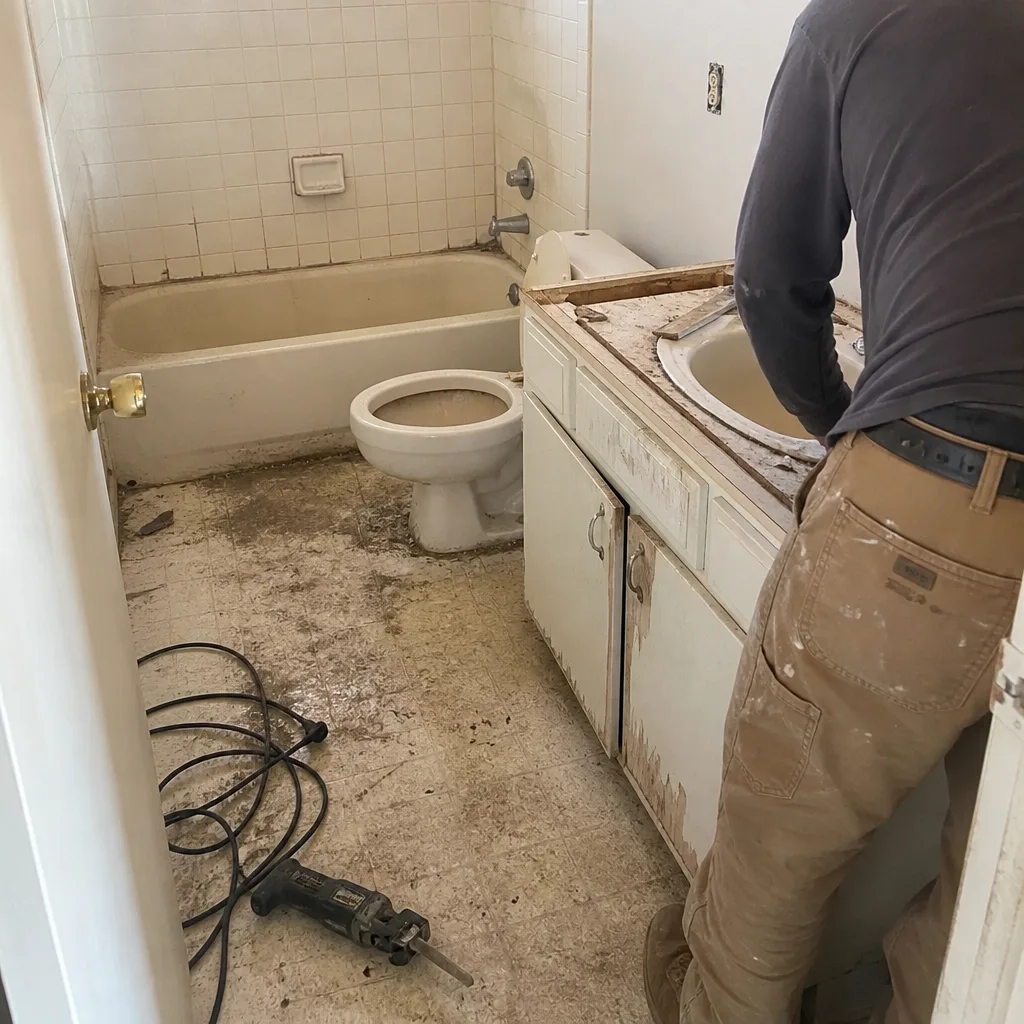
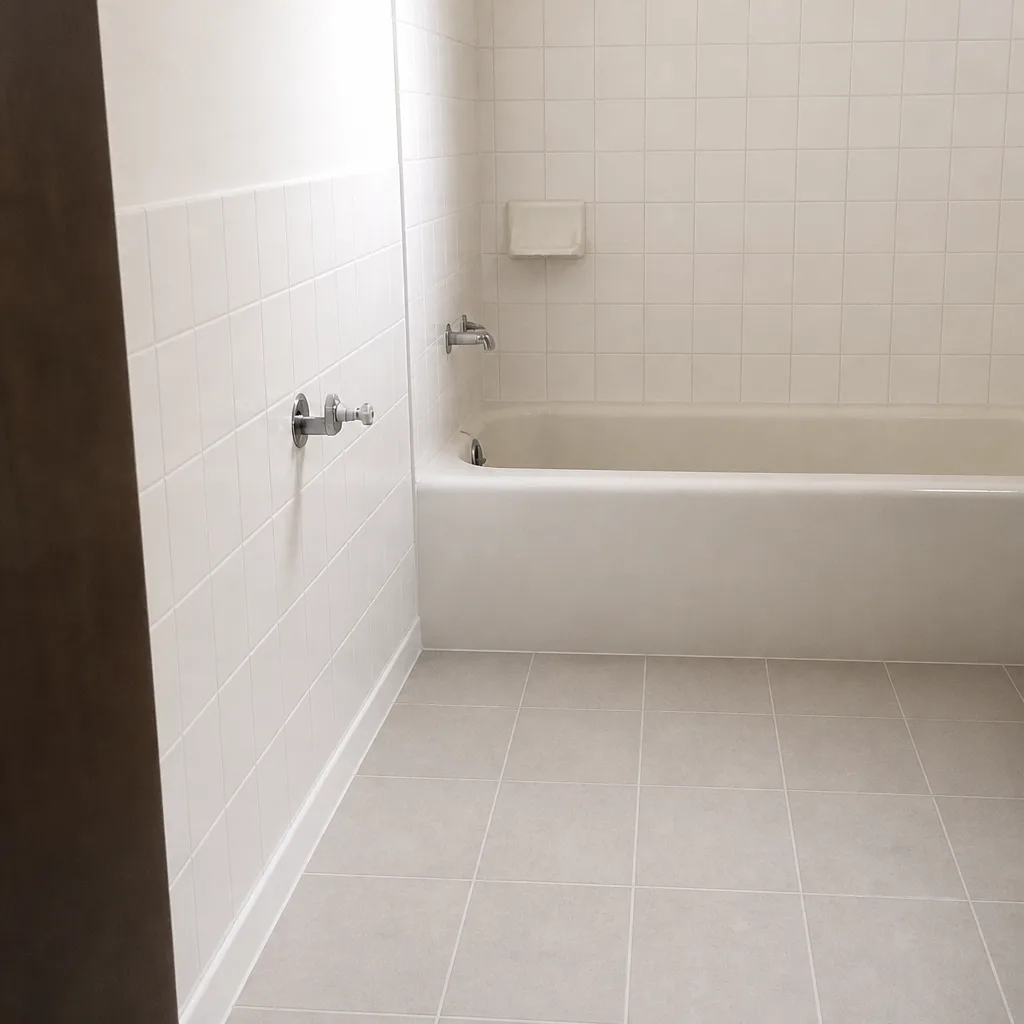
See the difference
 Before
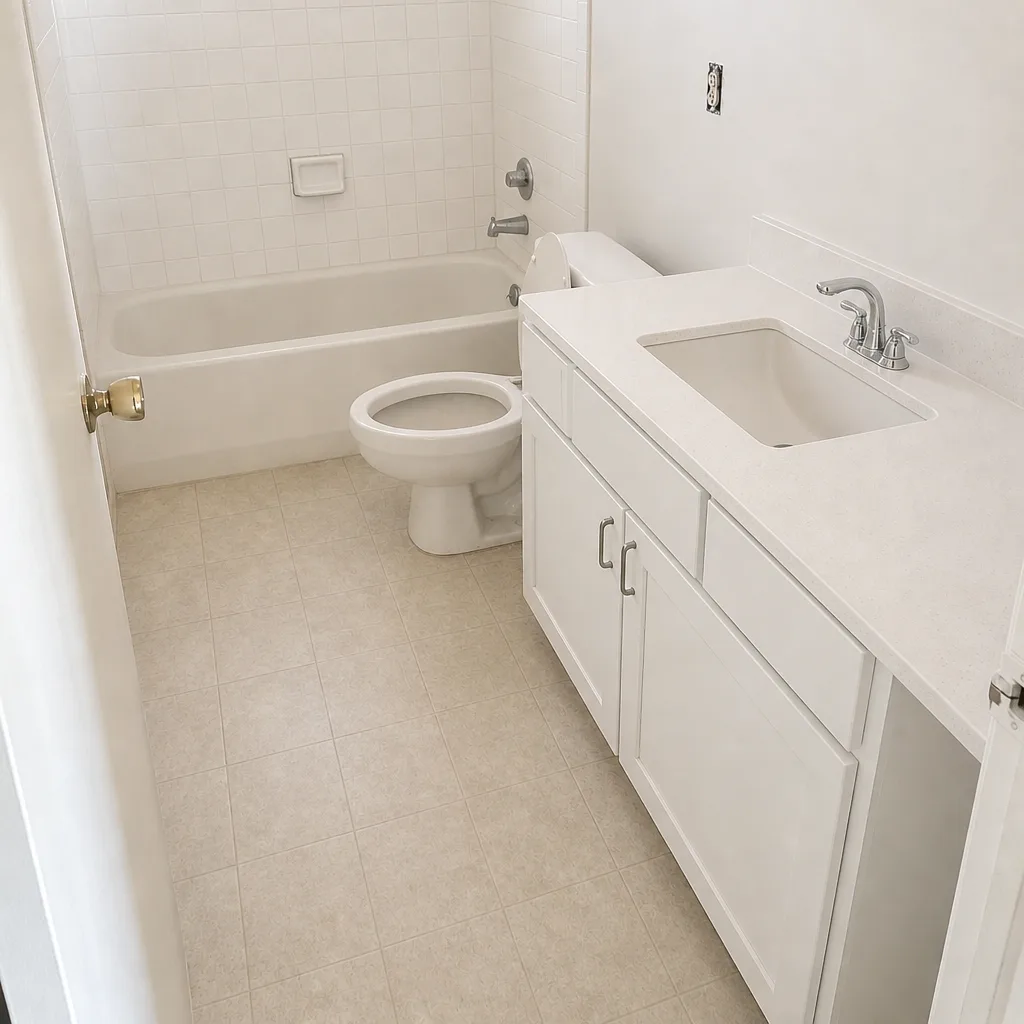 After
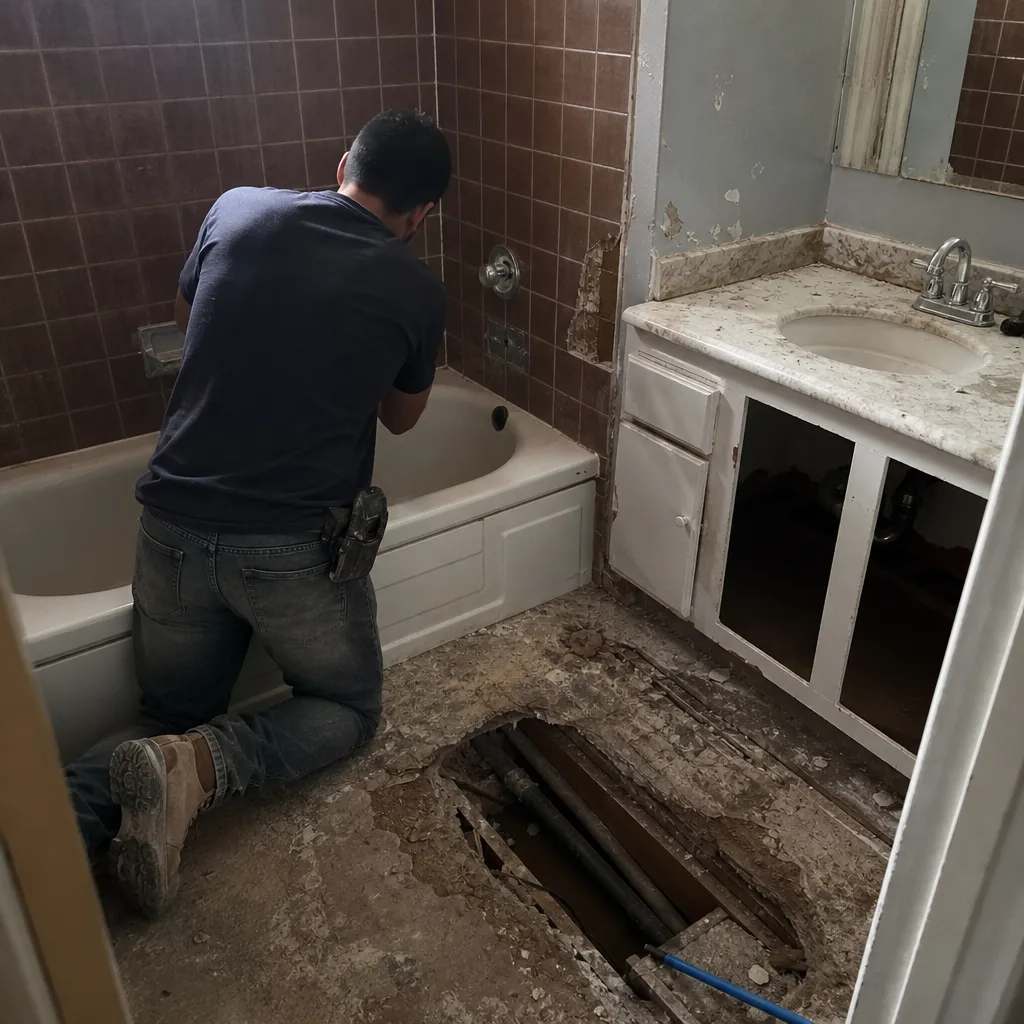 Before
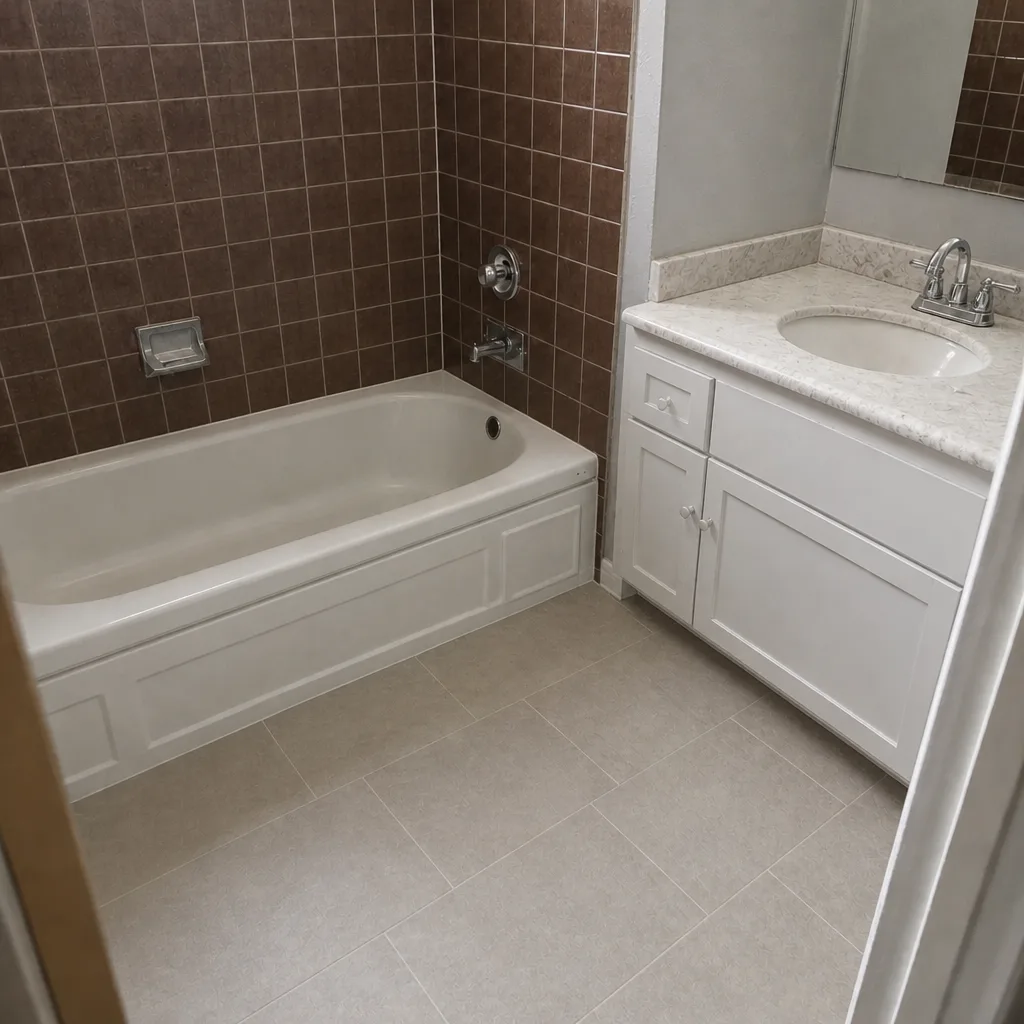 After
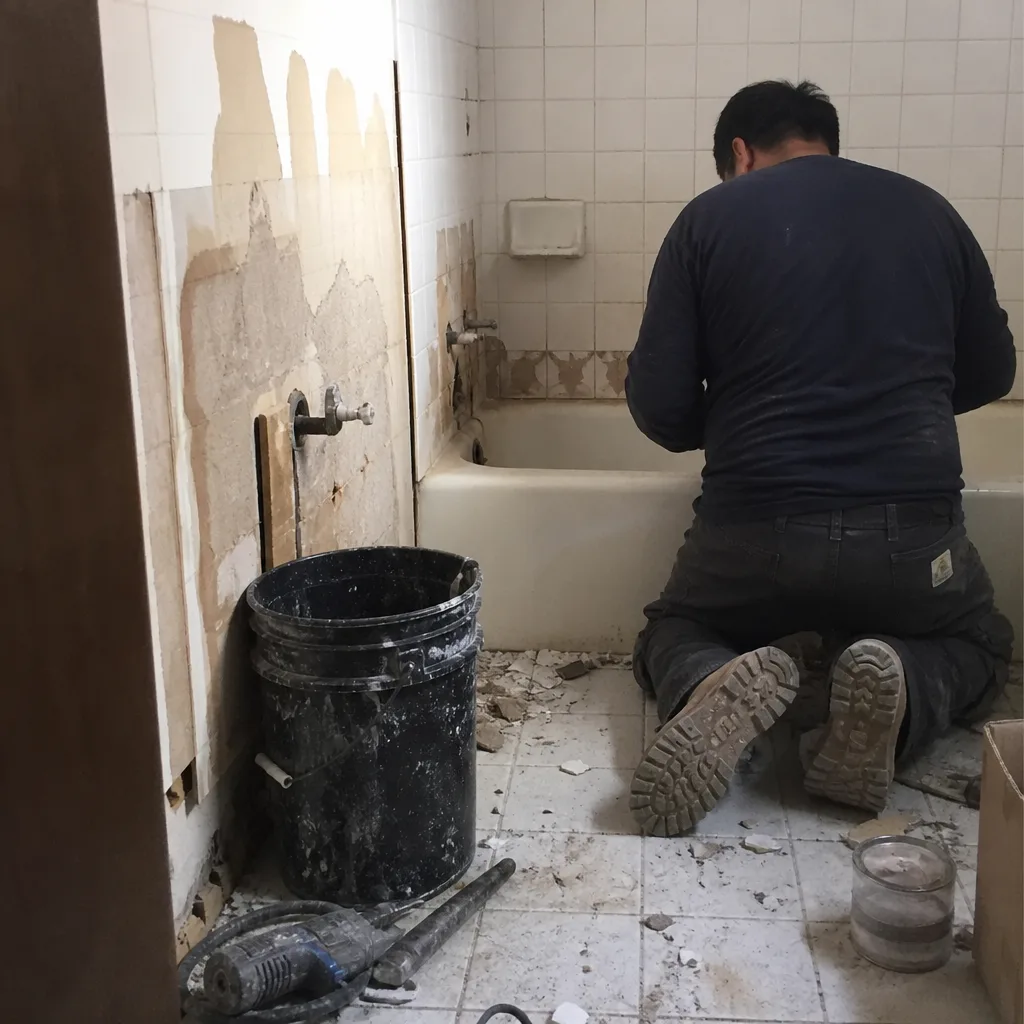 Before
 After
When to Call a Professional
Some of this guide is homeowner work: wiping down the shower, testing the fan, cleaning with the right products. Other parts call for a pro. Call us when you find water damage behind a caulk line or a baseboard, when a tile field has hollow spots, when a shower leak keeps returning after re-sealing, or when you’re ready to replace a bath you can’t safely step into with a shower that fits how you want to live. Those are the jobs where the fix has to go behind the surface. Bathroom Remodeling Spring Valley offers free estimates in Spring Valley. Call (844) 312-0122 to schedule yours. Our technicians have up to 10 years of experience, and we work in bathrooms every day.
Frequently Asked Questions
Re-caulk the wet joints once a year, ideally in the fall just before the mild season closes. The extreme heat and constant AC cycling here move sealant more than in a moderate climate, so an annual refresh keeps the joints protected through the next summer. If a caulk line is already lifting in spring, don’t wait for fall. Call (844) 312-0122 for a free estimate on anything that needs more than sealant.
Scale gets worse in summer because higher temperatures speed evaporation, and faster evaporation leaves the water’s minerals behind on the surface sooner. That means more frequent wipe-downs, more frequent glass cleaning, and periodic soaking of showerheads and aerators through the hot months. If your scale is severe enough that cleaning no longer keeps up, a free in-home estimate can tell you whether new fixtures or a remodel is the better answer. Call (844) 312-0122.
Matte and brushed finishes hold up best because they hide the light scale this area’s water leaves behind and don’t show spots the way polished chrome does. Whichever finish you choose, use a pH-neutral cleaner and a soft cloth, and shade any bathroom window that gets direct sun so UV doesn’t weather one side faster than the other. We spec finishes from Kohler, Moen, Delta and American Standard based on your budget and the upkeep you’ll actually do.
Yes, because most of what fails in a bathroom starts invisibly. A pre-summer inspection catches grout gaps, softened caulk and a weak fan before the heat and AC cycling turn them into water damage. The inspection takes about an hour and often replaces a repair with a few tubes of sealant. If you’d rather have a trained eye go through it, call (844) 312-0122 for a free estimate.
A leak that returns after re-caulking usually means the water is getting behind the substrate, not through the bead. Caulk fixes the surface; it can’t fix a failed waterproofing layer. That’s a job for a specialist who can assess what’s behind the tile. Call (844) 312-0122 to schedule a free estimate before the damage spreads.
The best time is after the fall re-seal and before the next summer heat arrives, so you’re never living through a remodel in the peak of the year. As for cost, every job is priced per project from a written estimate, so the number you get reflects your actual layout, fixtures and waterproofing scope. Call (844) 312-0122 for a free estimate. We answer 24/7. Fast dispatch from 7am to 7pm, Sunday through Friday.
The Bottom Line
Spring Valley doesn’t hand you four seasons, so a four-season maintenance calendar won’t protect your bathroom. The two passes that matter most are the pre-summer inspection, which catches grout, caulk, sealant and ventilation problems before the heat and AC cycling stress them, and the fall re-caulk and re-seal window, which sends your joints into the next summer already protected. Between those, clean more often in summer to counter faster scale buildup, run the exhaust fan longer, and use the right products on matte and brushed finishes. Any failure that reaches the waterproofing layer belongs with a specialist. Maintenance prevents most of what we see. Good waterproofing behind the tile prevents the rest. If you’re ready for a free estimate, call (844) 312-0122. We answer 24/7. Fast dispatch from 7am to 7pm, Sunday through Friday.
Written by the team at Bathroom Remodeling Spring Valley.