Last updated November 18, 2026


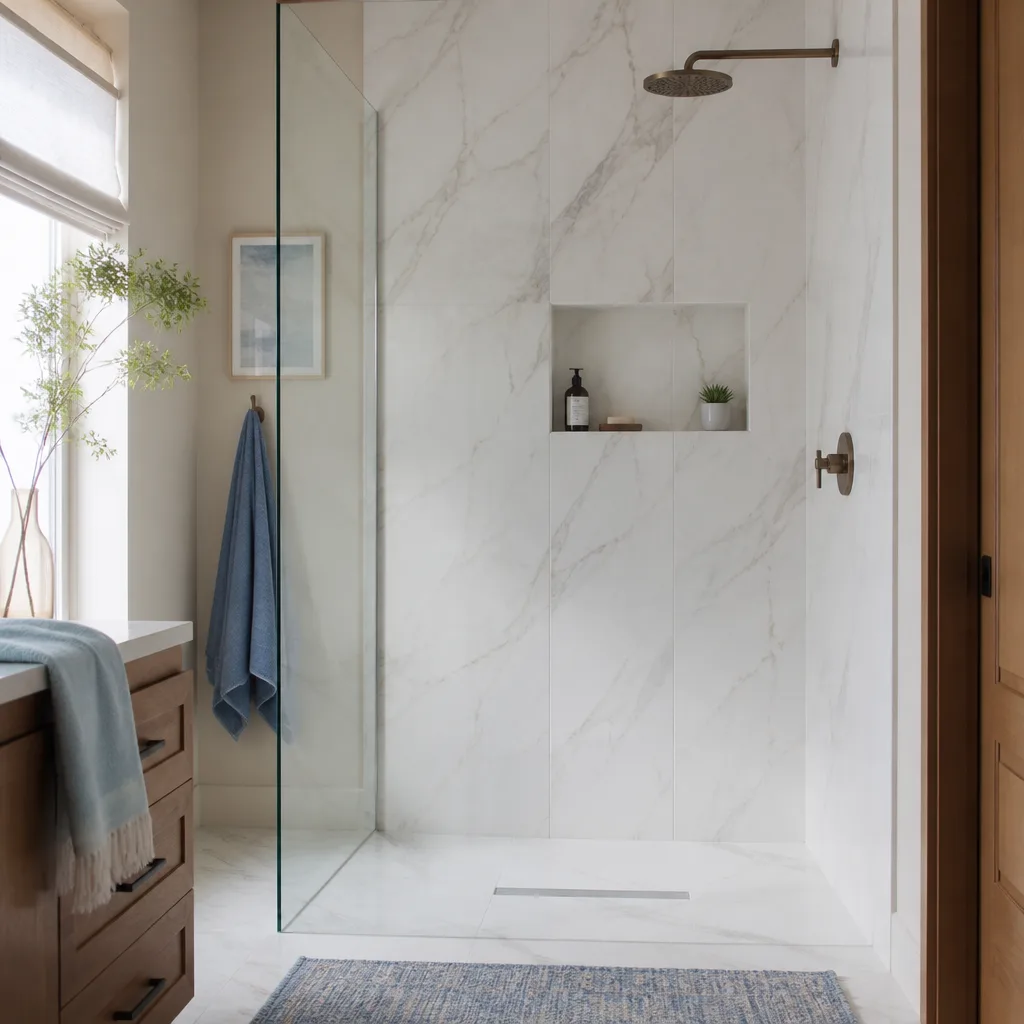

Free in-home design visit - walk-in showers, tub-to-shower conversions, and Kohler, Moen, and Delta fixtures planned to your exact space
DIY vs Professional Bathroom Remodeling: The Spring Valley Homeowner’s Decision Guide
Most homeowners framing this decision think it’s about confidence. It isn’t. The DIY-versus-professional question in a Spring Valley bathroom remodel comes down to a short list of tasks where permits, manufacturer warranties, and failure consequences make amateur execution genuinely expensive rather than merely imperfect. Nevada treats plumbing and electrical work above a defined dollar threshold as licensed-contractor territory, which means a motivated homeowner who relocates a shower drain isn’t just risking workmanship, they may be putting their insurance coverage for any water damage that follows on shaky ground. This guide separates the work you can honestly do yourself from the work that quietly voids protections you paid for, and it shows you where the real cost of DIY lands once tool rental, learning-curve waste, and do-overs are counted.
Quick Answer
In a Spring Valley bathroom remodel, DIY makes sense for demolition, painting, fixture swaps, and finish carpentry, and it makes no sense for anything behind the wall: plumbing relocation, electrical circuits, waterproofing, and permit-triggering work. Estimates for a full professional remodel typically run well above what a DIY budget suggests, but the gap closes once you account for tool rental, material waste, and the cost of redoing a failed shower pan. If your project touches drain lines, circuits, or a wet-area rebuild, hire licensed professionals and put your effort into choosing fixtures instead.
Styles & brands we work with
- Walk-in shower
- Tub-to-shower
- Freestanding tub
- Kohler
- Moen
- Delta
- Frameless glass
Table of Contents
- What Nevada Law Actually Prohibits You From Doing Yourself
- Where Manufacturer Warranties Kill a DIY Install
- Where DIY Genuinely Makes Sense in a Spring Valley Bathroom
- The Real Hourly Cost of Doing It Yourself
- How Hard Water and Desert Conditions Change the Math
- A Decision Framework for Your Room, Scope, and Budget
- Common Mistakes to Avoid
- When to Call a Professional
What Nevada Law Actually Prohibits You From Doing Yourself
Nevada requires licensed contractors for plumbing and electrical work above a defined dollar threshold, and that single fact reshapes the DIY conversation for any bathroom in Spring Valley. The line isn’t drawn at whether you’re capable. It’s drawn at whether the work is regulated, and regulated work carries consequences that extend past the finished room: permit records, inspection sign-offs, and insurance coverage all depend on who did the work and whether it was done under license.
Here’s the practical split as we see it on projects across the valley.
- Plumbing relocation: Moving a drain, relocating a supply line, or adding a second sink means altering the plumbing system. Most municipalities require a permit, and in Nevada the licensing threshold makes unpermitted plumbing a real coverage question if a leak later damages the floor below.
- Electrical circuits: Adding a GFCI receptacle, moving a light into a shower zone, or upgrading to a heated towel bar means new circuits and code compliance. Bathroom electrical sits in a wet environment where code requirements are stricter than anywhere else in the house.
- Waterproofing and shower pans: A shower pan that fails sends water into framing and subfloor for months before anyone notices. This is the single most common source of hidden damage we encounter, and it’s almost always a waterproofing problem rather than a tile problem.
- Structural changes: Removing a wall, widening a doorway, or moving a tub-to-shower footprint may touch framing. That’s permitted work and it needs an inspection to close out.
The consequence most homeowners don’t price in is insurance. If unpermitted plumbing fails and water reaches the room below, your insurer may treat the resulting damage differently than damage from permitted, inspected work. That’s not a scare tactic, it’s how coverage questions get resolved. Before you pick up a pipe wrench in your Spring Valley home, call your city’s building department and ask what your specific scope requires. It takes ten minutes and it settles the question.
The work we handle is bathroom remodeling and the licensed trades that come with it, so if your scope touches drains or circuits, that’s the point where the DIY line ends.
Where Manufacturer Warranties Kill a DIY Install
A manufacturer warranty is a contract, and most of the fixture brands you’d want in a bathroom attach conditions to it: installation by a licensed professional, installation to code, sometimes installation per the manufacturer’s own specification sheet. Break those conditions and the warranty language gives the brand an out, even when the failure has nothing to do with who held the wrench.
We work with a defined set of brands because we can spec them correctly and install them to their own requirements. That matters more than people expect. Consider what each tier actually needs from an install:
- Moen and Delta: Both publish detailed rough-in specifications and pressure-balance requirements. A valve installed to the wrong depth, or a cartridge seated incorrectly, can void coverage on the cartridge and the trim. These are forgiving brands, but “forgiving” still means following the sheet.
- American Standard: Toilets and tubs have precise flange and drain alignment requirements. A toilet that rocks because the flange sits too high or too low is an installation issue the brand won’t cover, and it’s the kind of thing a first-time setter gets wrong.
- Toto: Their washlet and one-piece lines rely on specific electrical and water supply conditions. Installing these to spec is a different job than seating a standard two-piece unit, and the warranty conditions reflect that.
Where this bites hardest is in the wall. A shower valve installed incorrectly doesn’t fail on day one. It weeps slowly, the wall stays damp, and by the time the damage shows up, the warranty window on the cartridge has long closed and the damage claim lands on you. If a manufacturer can tie the failure to a non-compliant install, they will, and that’s true whether or not the install looked fine from the outside.
If you’re spec-ing fixtures yourself, the honest move is to read the installation instructions before you buy. Some of them are three pages. Some run to twenty and reference a licensed plumber by name. That paragraph tells you what you’re actually signing up for.
Where DIY Genuinely Makes Sense in a Spring Valley Bathroom
There’s a real list of work you can do yourself in a Spring Valley bathroom, and it’s longer than the licensed trades would like you to believe. The test is simple: the skill ceiling is low and the failure consequences are reversible. If a mistake costs you a Saturday and a bucket of paint, it belongs on your list. If a mistake costs you a subfloor, it doesn’t.
- Demolition. Pulling tile, prying off vanity tops, and removing a tub is labor, not craft. Wear eye protection and gloves, shut off water at the main first, and bag the debris. Save a piece of the old tile for color-matching if anything survives.
- Painting and patching. Bathrooms need moisture-rated paint and proper priming. This is where a homeowner with a steady hand often beats a rushed subcontractor.
- Fixture swaps that don’t touch rough-in. Replacing a faucet when the valve is already there and functioning, or swapping a showerhead on an existing arm, is a reasonable DIY job. New rough-in, new valve, or anything behind the wall is not.
- Finish carpentry and trim. Baseboard, casing, and a new mirror hung level are low-risk, high-satisfaction tasks. Measure twice, anchor into studs, and you’ll get a result that matches what a finish carpenter would charge for.
- Accessory install. Towel bars, robe hooks, shelving, and a new toilet seat are the small wins that make a dated room feel updated while the bigger work is being planned.
- Choosing what goes in. This is the DIY I’d encourage any homeowner to own completely. Pick your tile, pick your fixtures, and understand what you’re putting in. Nobody knows your bathroom better than you do.
Where we’ve watched homeowners get in over their heads is at the boundary: swapping a shower valve counts as a fixture swap in the mind, but it’s a rough-in job in practice. If the work means cutting into the wall, changing what’s behind it, or adding a new connection to water, drain, or electricity, that’s a different category. When you draw your DIY list, draw that line first, and if it lands somewhere unclear, call us and we’ll tell you straight whether it’s a job for you.
The Real Hourly Cost of Doing It Yourself
The DIY-versus-pro comparison most homeowners make is quote-versus-material, which is the wrong math. The real comparison is quote-versus-material-plus-tools-plus-waste-plus-redo, and once you’re honest about the last two, DIY’s advantage shrinks faster than people expect.
Here’s how the accounting actually breaks down for a Spring Valley bathroom project:
- Tool rental. A tile saw, a wet saw stand, a demolition hammer, and an air mover add up over a multi-week project. Rentals are priced per day or per half-day, so a job that runs long accumulates costs every time you keep the saw another morning.
- Material waste from the learning curve. Tile breaks. Backer board gets cut wrong. The first mortar bed goes on too thick and the second is fine. First-timers typically use 15 to 25 percent more material than a completion-experienced crew, and the overage is usually at the most expensive tier you bought.
- Redo costs. This is the honest one. A shower pan that leaks and has to be rebuilt means paying for waterproofing twice, plus the tile, plus the fix to whatever the water touched. That’s the scenario where DIY stops being a budget strategy and becomes a loss.
- Time. A full bathroom remodel runs into dozens of hours, often spread over weeks. If you’re taking unpaid time off work, that’s a cost. If you’re doing it after your day job, it’s a sleeping cost and a stalling project.
What a professional estimate actually pays for is completion. Our Bathroom Remodeling Spring Valley estimates are written line items, the price is fixed for the scope at signing, and the fixtures come from the brands we spec for exactly this work. You get a completion date and a paper trail, and the trades that drew a permit get inspected.
The honest recommendation is this: put your own hours into demolition, painting, and trim, and put your budget into the parts of the job that carry the most risk. If the trades account for the bulk of your quote, ask for a line breakdown. Any professional who won’t give you one is telling you something.
How Hard Water and Desert Conditions Change the Math
Spring Valley households sit squarely in one of the hardest-water regions in the country, and that changes how forgiving imprecise installation actually is. Mineral content that builds up in a soft-water installation over years can build up over months here, and the places where it shows up first are exactly the places a first-time installer is most likely to get sloppy.
Here’s what we see in local bathrooms, and what it means for DIY:
- Shower valve cartridges. Hard water accelerates cartridge wear, and a valve installed to slightly the wrong depth or angle wears faster still. A cartridge swap is a reasonable homeowner job only when the valve itself is correct; the cost of getting that wrong shows up as repeated repairs rather than one failed part.
- Grout and sealant. Hard water interacts with grout and silicone differently than in soft-water climates. Imprecise grout lines and poorly packed joints fail faster here, and a shower that might have gone five years between regrouts in a softer climate can start showing wear much sooner.
- Shower pans and waterproofing. This is the big one. Improper sloped shower pans don’t just pool water, they pool mineral-heavy water that stresses the waterproofing layer from above and from below. A pan with a slightly wrong slope that might have limped along for years elsewhere will show failure behind the wall much faster in Spring Valley.
- Drain alignment and fixtures. Mineral deposits accumulate on drain and fixture surfaces faster here, so a drain that wasn’t set perfectly flat gets fouled more quickly and is harder to clean.
- Supply lines and shutoffs. Fixtures installed with slightly over-tightened or under-tightened connections are less tolerant. Small weeps with mineral-heavy water leave a visible trail quickly; the trail is a warning that often arrives after the wood is wet.
None of this means a Spring Valley homeowner can’t do careful work. It means the margin for a slightly-off install is thinner here than in a soft-water market. Where a first-timer’s slip might go unnoticed for the life of the bathroom in another climate, here it shows up inside a few seasons.
That’s the argument for walk in shower builds to be the most conservative part of the project. Those are the installs where the waterproofing stack matters most, and the entire assembly has to be right: substrate, membrane, slope, and drainage. We spec Schluter Systems for shower waterproofing precisely because the method is deterministic and the failure mode is slow, not sudden. Doing it wrong doesn’t announce itself, it just shows up years later as a rotten subfloor and a stained ceiling in the room below.
A Decision Framework for Your Room, Scope, and Budget
The right way to settle this decision is one room and one scope at a time. Bathroom types don’t carry the same DIY risk, and the money question splits cleanly once you’ve mapped the scope. Use these three tests.
Test one: which bathroom is it?
- Guest bath or powder room. Small footprint, usually one sink, sometimes just a toilet. Cosmetic DIY is often viable here because the wet area is limited and the consequences of a mistake are contained.
- Hall bath. A tub or shower is present. Waterproofing risk goes up, but the scope is still manageable if the layout doesn’t move. This is the room where the DIY list of demolition, paint, and trim earns the most of the budget.
- Primary bath. Larger wet areas, more fixtures, and usually the layout most likely to get moved. This is where professional-only work dominates. Plumbing and electrical across a larger footprint means permits, inspections, and warranties all matter.
- Accessible conversion. A tub-to-shower conversion with aging-in-place goals moves the safety bar. Grab bar blocking, curbless entry, and proper drainage slope all need to be right the first time. This isn’t a cosmetic project, and it shouldn’t be DIY.
Test two: which scope are you actually doing?
- List every task you would do yourself and every task you would hire out.
- Mark any task that touches a drain, a supply line, a circuit, framing, or the shower envelope.
- Call your city’s building department and ask which items on that marked list require a permit in your specific municipality.
- Any task requiring a permit that also requires a licensed contractor is now a professional item, and that decision has nothing to do with your skill.
- Any task where a manufacturer warranty requires licensed installation is now a professional item for the same reason.
- What’s left is your real DIY list.
Test three: which budget are you actually running?
If the total budget is tight and the scope is cosmetic, DIY can work. If the total budget is tight and the scope is a wet-area rebuild, the honest answer is to do less, not to do it yourself. A smaller professional project that survives twenty years beats a full DIY project that fails inside three. We’ve seen this on Spring Valley projects where the homeowner did beautiful tile themselves on a shower pan that wasn’t sloped, and the tile had to come out anyway. The work looked good. It didn’t work.
When the scope is a walk-in shower or a full-room rebuild, the conversation should shift from “can I do this” to “what does the honest version of this project cost.” Our Spring Valley estimates are free and itemized, and they’re the fastest way to see what you’re actually comparing a DIY weekend to.
Common Mistakes to Avoid
- Skipping the permit because the work “looks small.” Any plumbing or electrical alteration above the licensing threshold needs the permit, even if the visible change is modest. Unpermitted work is the most reliable way to create an insurance question later.
- Treating waterproofing as a tile problem. The tile is the visible part; the waterproofing behind it is what matters. Most failures we see trace back to a shower envelope that was never properly assembled, not to the tile on top.
- Buying a premium fixture without checking the install requirement. A high-end valve or a washlet has specific rough-in and supply requirements. Buying before you’ve read the spec sheet means paying for a brand you can’t install to its own warranty.
- Assuming hard water is a soft-water climate problem. Spring Valley is not a soft-water market. Precise installation matters more here than in a lot of places homeowners have lived, and a slightly off grout line or joint fails faster.
- Underestimating tool rental over the life of the project. A reno that runs long turns a weekend saw rental into weeks of cumulative cost. Budget your rentals by the calendar, not by the square footage.
- Cutting the scope instead of the standard. Homeowners in tight-budget situations often try to bring down the price by accepting a lower-grade fixture. Bringing the scope down is usually the better move: a smaller, well-built bathroom holds up better than a large one built to hit a number.
- Buying a tub-to-shower conversion kit and assuming it’s turnkey. Accessibility conversions have specific requirements for drainage slope, blocking, and entry that aren’t visible in the box. They’re built, not installed.
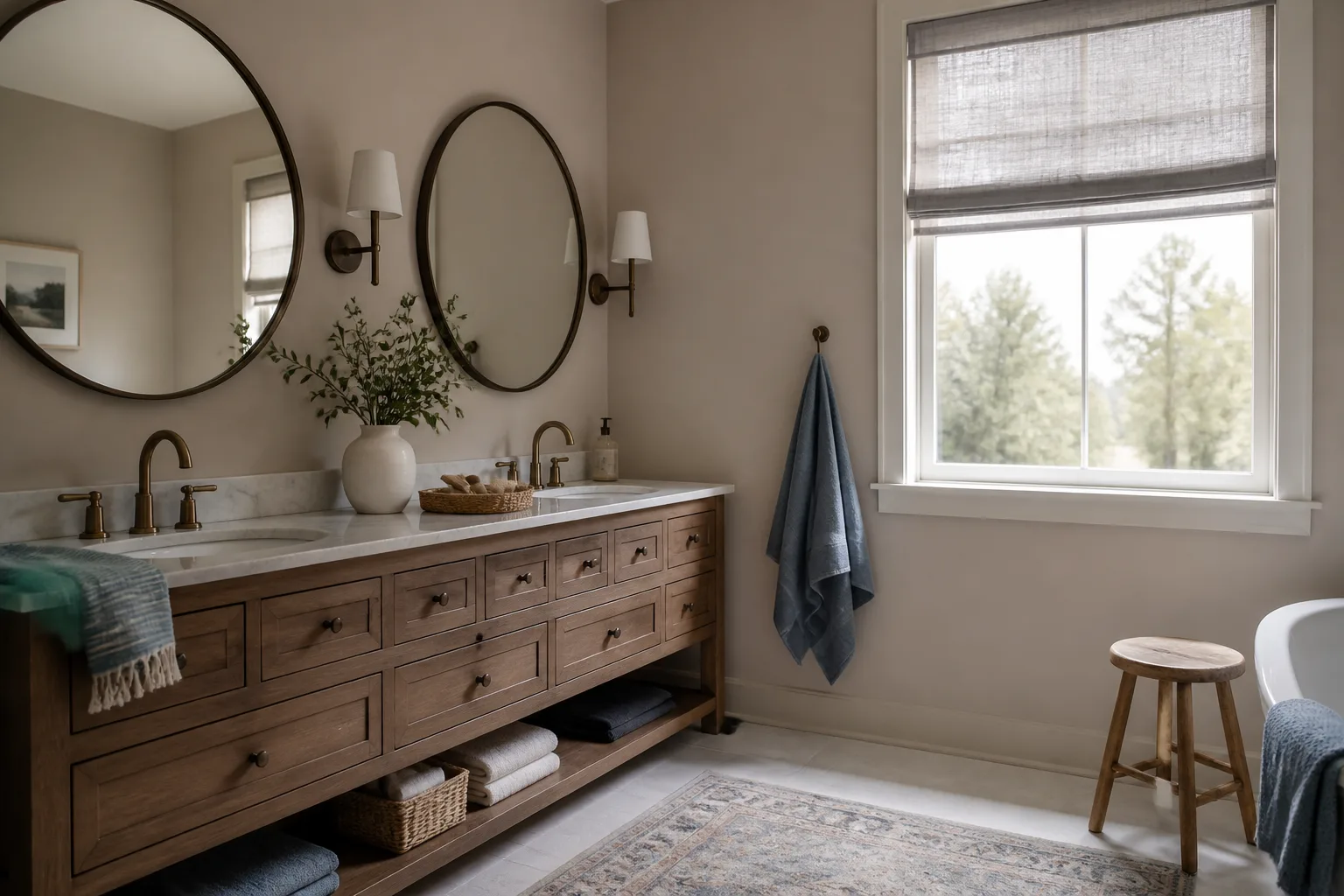
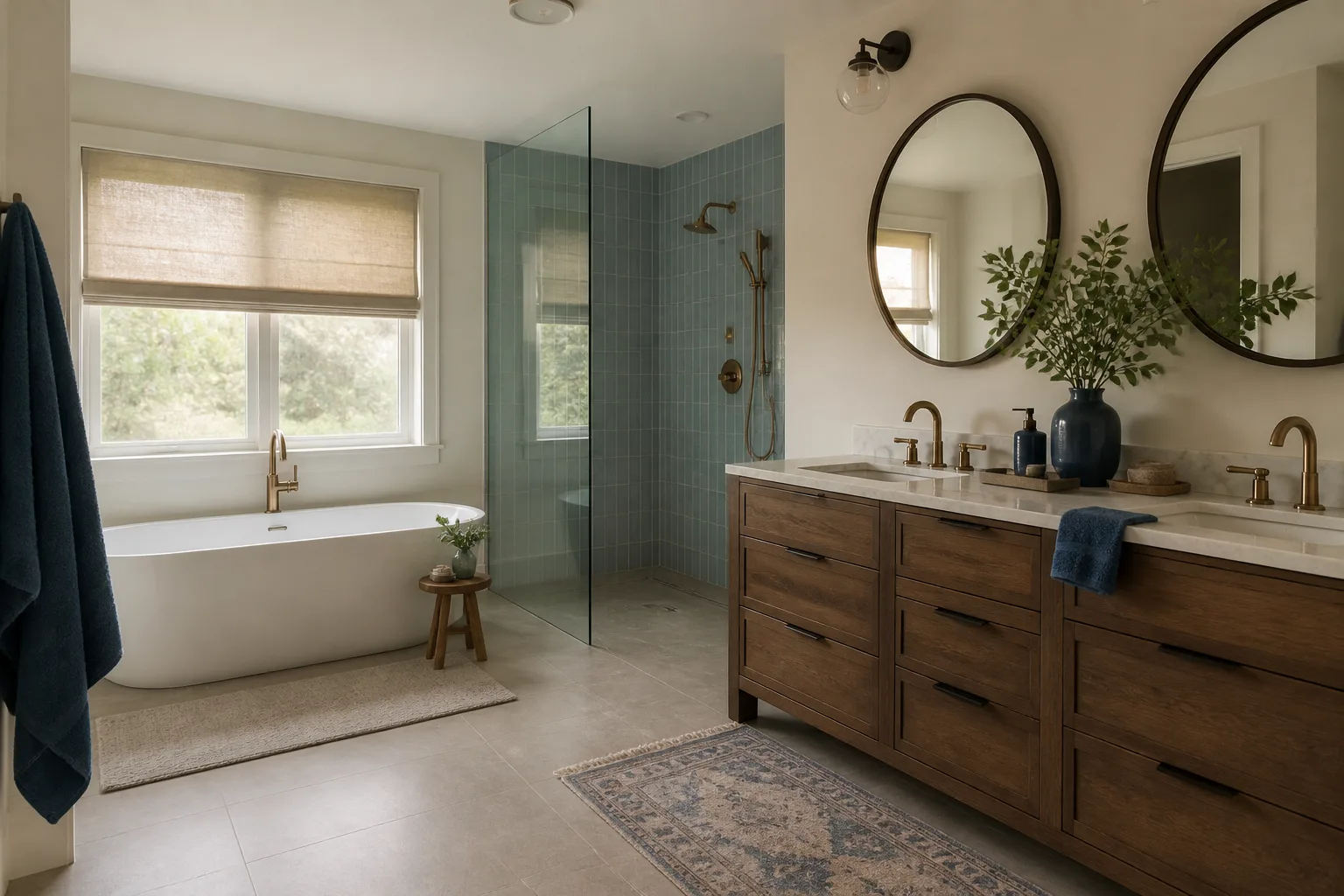
See the difference
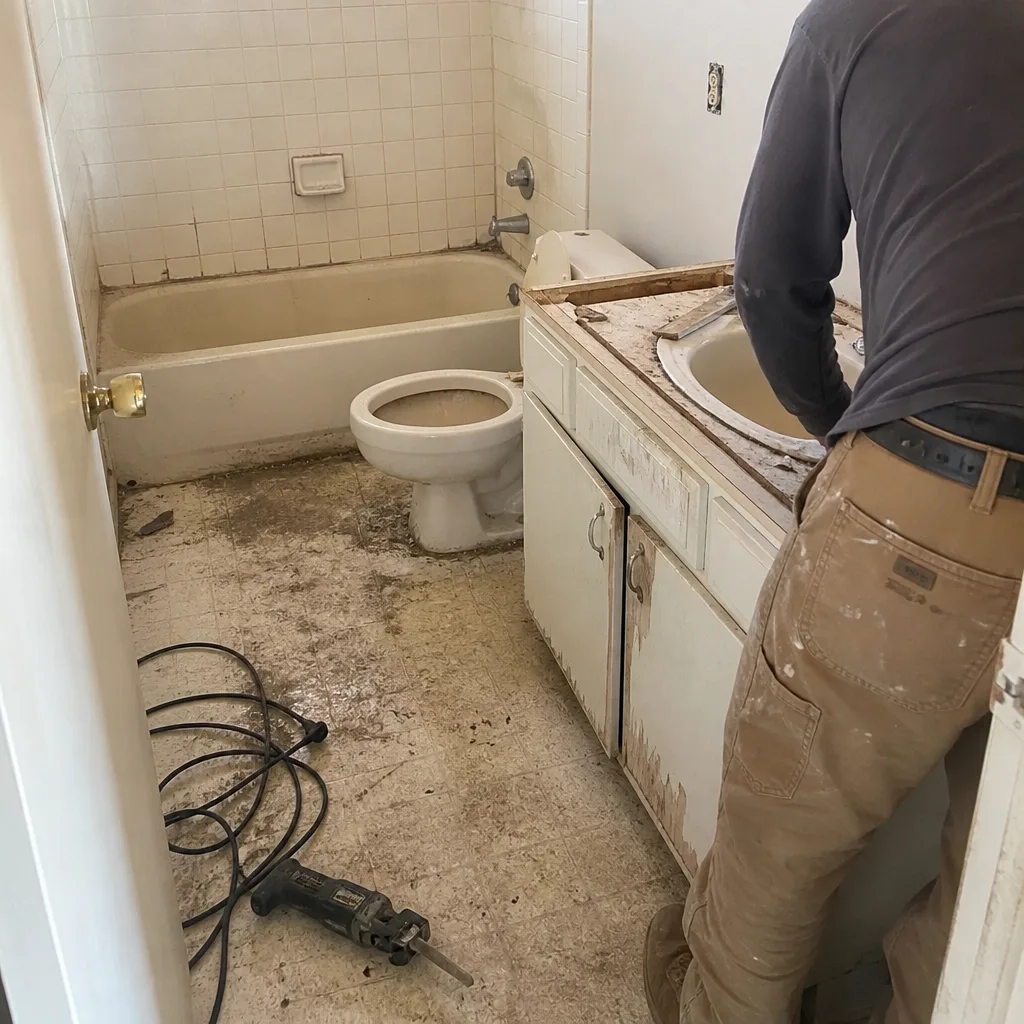 Before
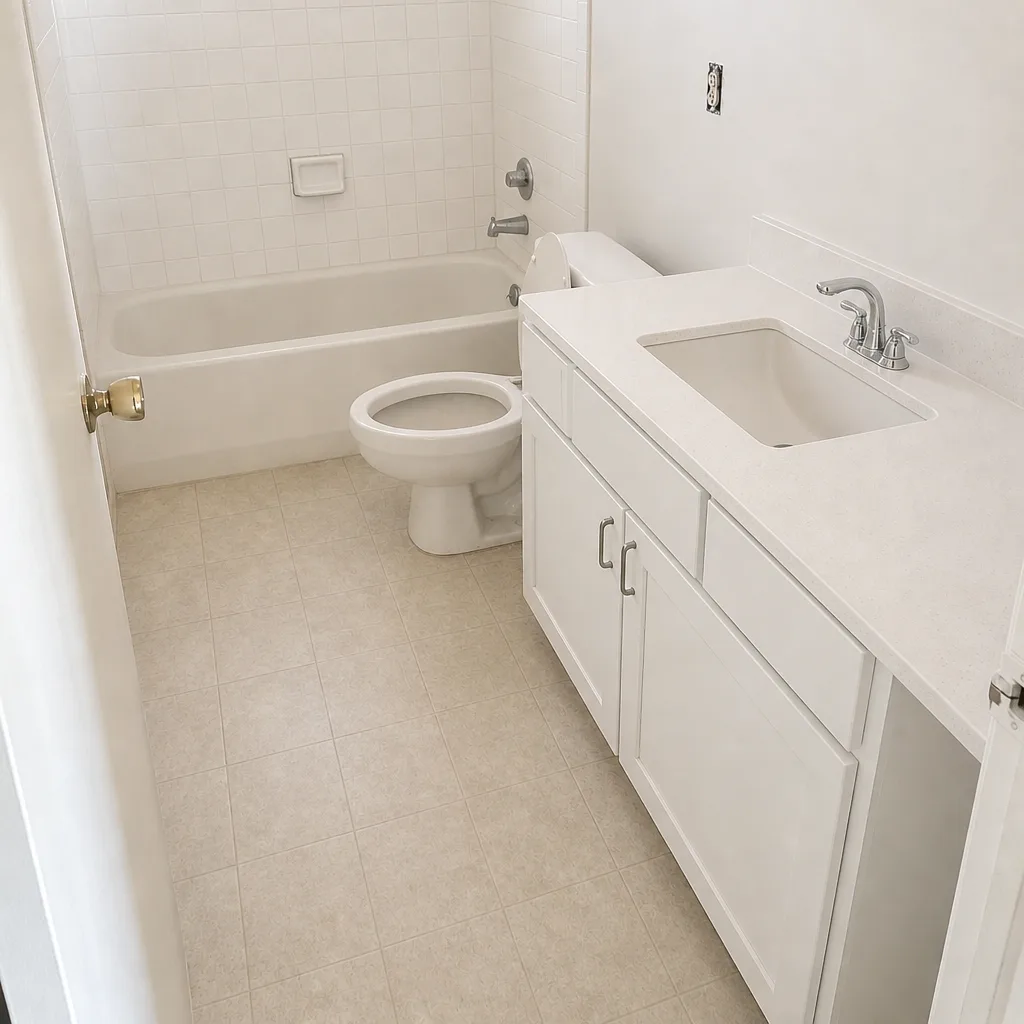 After
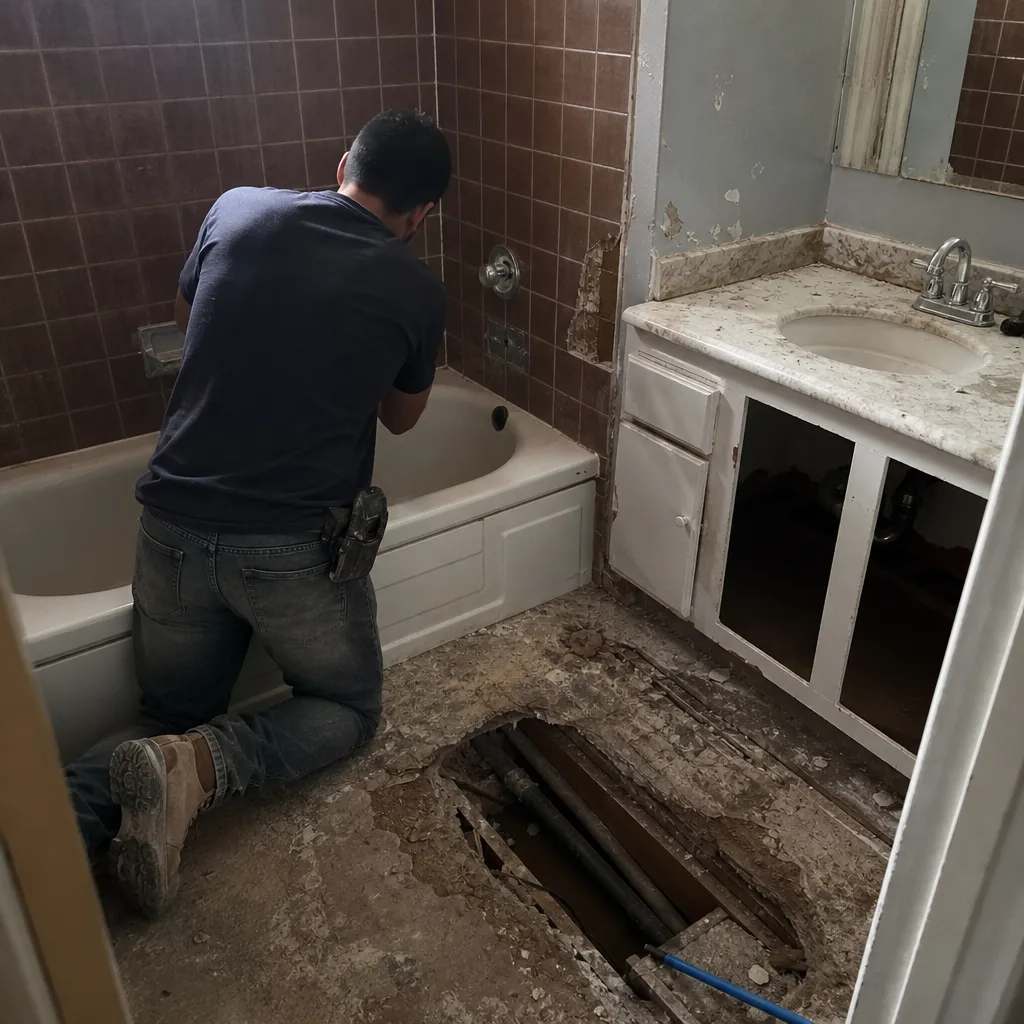 Before
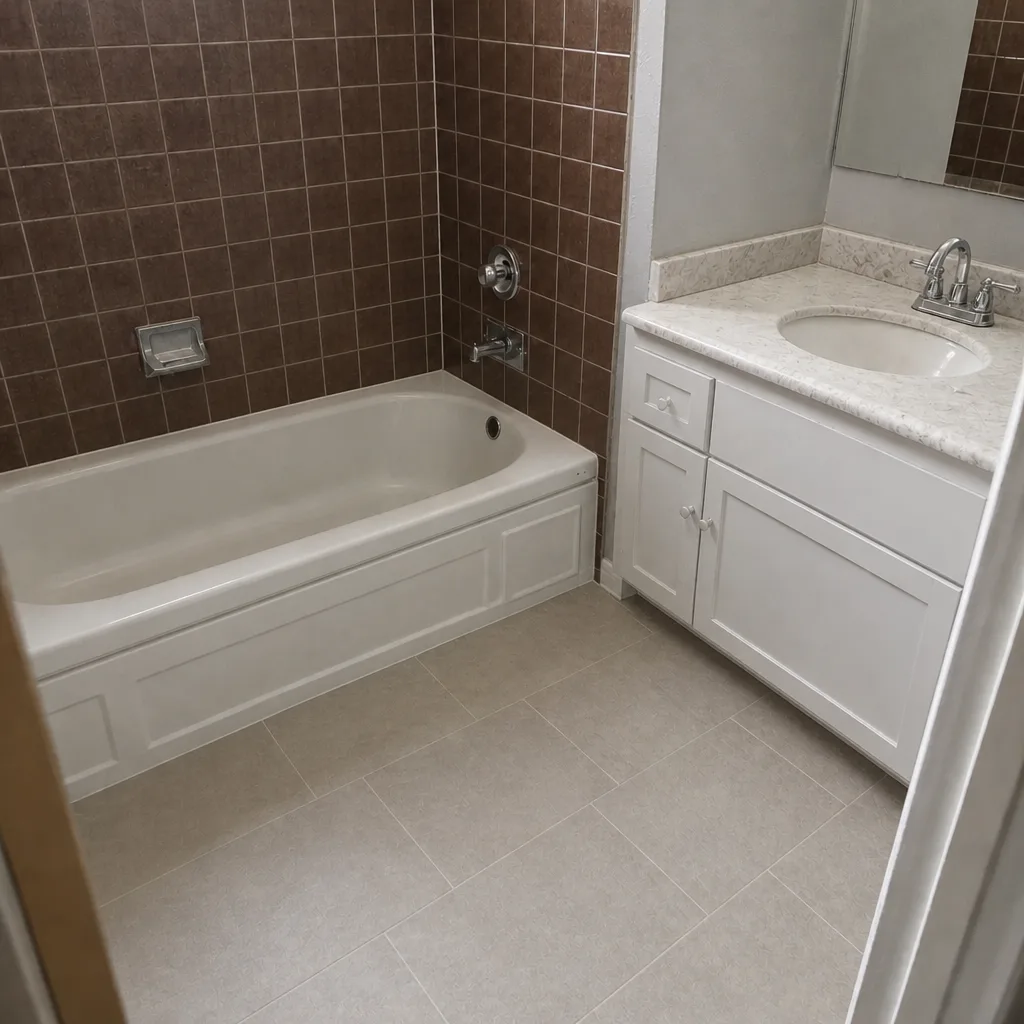 After
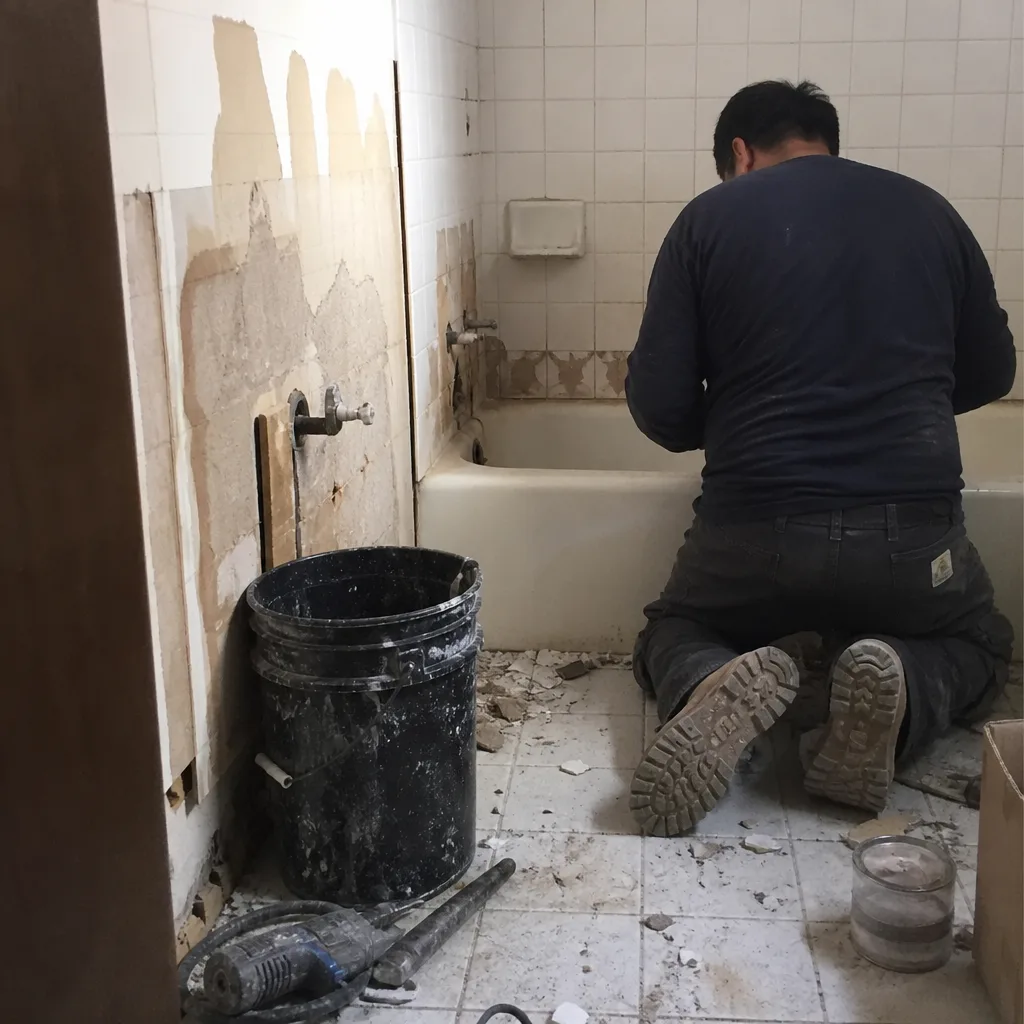 Before
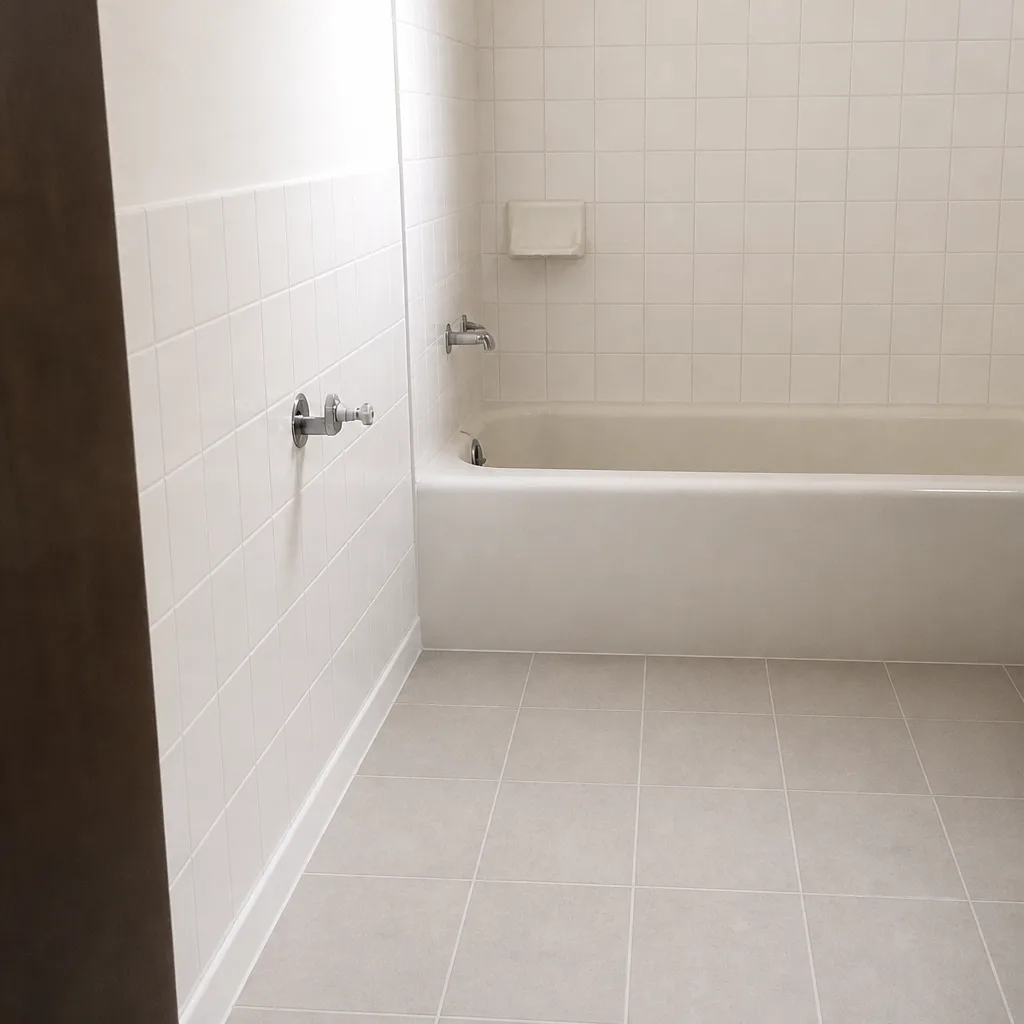 After
When to Call a Professional
Call a professional when the work touches plumbing, electrical, framing, or the shower envelope, when a manufacturer warranty requires licensed installation, or when any part of your plan relies on a permitted inspection to close out. Call when the room is a primary bath or an accessible conversion, and call when “we’ll figure out the slope” enters a conversation about a walk-in shower. Call when you’re on a timeline, when you’re closing on the house, or when the space below the bathroom is finished. Our technicians have up to 10 years of experience and work in bathrooms every day, and Bathroom Remodeling Spring Valley offers free estimates in Spring Valley. Call (844) 312-0122. We answer 24/7. Fast dispatch from 7am to 7pm, Sunday through Friday.
Frequently Asked Questions
You can do the cosmetic and finish work yourself in a Spring Valley bathroom, and you can’t legally do the regulated plumbing and electrical above the licensing threshold. The honest split is demolition, paint, trim, and fixture swaps on existing rough-in for DIY, and plumbing relocation, new circuits, waterproofing, and permits handled by licensed trades. If you’re unsure which side of the line a task sits on, call your city’s building department; if you want a professional read on the scope, call (844) 312-0122 and we’ll walk you through it.
Unpermitted plumbing that fails can create a coverage question with your insurer, especially when the resulting water damage reaches another part of the house. Whether your policy treats the damage as covered often depends on whether the underlying work met code and permit requirements. It’s worth a call to your insurer before you start: the answer is specific to your policy and it changes the risk math. If the plumbing work is above the licensing threshold in Nevada, that’s the point where insurance risk and licensing law overlap, and the safest answer is a licensed professional.
Many do, and most attach conditions about installing to code and per the manufacturer’s own instructions. That matters for brands like Moen, Delta, American Standard, and Toto, whose warranty language can tie coverage to compliant installation. Read the warranty page for the specific product you’re buying before you decide to install it yourself; if the warranty requires a licensed professional, that condition is worth taking seriously on a fixture you’re paying premium prices for.
Professional remodel estimates in Spring Valley are set per job by a written estimate, and pricing depends on scope, size, and the fixture tier you choose. A cosmetic refresh costs less than a walk-in shower build or a tub-to-shower conversion, and the eight-brand portfolio we spec (from Moen to Toto and Grohe) lets us match your budget to the tier you actually want. Call (844) 312-0122 for a free estimate; estimates are free and itemized.
Hard water is the main reason. Spring Valley households sit in a hard-water region, and mineral-heavy water stresses the inside of a shower faster than soft water. Sloppy grout lines, poorly packed joints, and slightly off shower pan slopes fail faster here than they might in another market, which changes how much a first-time install can tolerate. In our experience, the shower envelope is the part of a Spring Valley bathroom where getting it right matters most.
Treating waterproofing as a tile problem. Homeowners often do careful tile work over a shower pan or backer board that wasn’t assembled correctly, and the failure shows up months later as water damage in the room below. The visible work can be beautiful and the assembly underneath can still be wrong. That’s why we spec Schluter Systems waterproofing on shower builds: the system is a method, not a material, and the method is what holds up.
The Bottom Line
The DIY-versus-professional question in Spring Valley isn’t really about skill. It’s about which tasks carry permit requirements, warranty conditions, and failure consequences that make doing them yourself genuinely expensive rather than merely imperfect. Do your own demolition, paint, trim, and shopping. Hire licensed professionals for anything behind the wall, and don’t accept a lower standard to keep a tighter scope. The bathroom you’ll live in for decades is worth finishing correctly the first time. If you’re ready to price it, call (844) 312-0122. We’re free to talk it through, we answer 24/7, and fast dispatch runs 7am to 7pm, Sunday through Friday.
Written by the team at Bathroom Remodeling Spring Valley.