Last updated November 18, 2026






Free in-home design visit - walk-in showers, tub-to-shower conversions, and Kohler, Moen, and Delta fixtures planned to your exact space
How to Hire a Bathroom Remodeling Contractor in Spring Valley: A Step-by-Step Guide
A Nevada contractor license tells you a company is legally allowed to build. It does not tell you whether they’ve ever waterproofed a shower pan correctly. That gap is where most bathroom remodeling disappointments begin. In Spring Valley, where general contractors advertise “bathroom remodeling” alongside twenty other services, the license classification on paper rarely matches the work you actually get. This guide walks you through the specific checks, questions, and quote-reading skills that separate a true bathroom specialist from an opportunistic generalist. You’ll learn what to verify with the state, what to ask before signing, and why the cheapest bid usually costs the most.
Quick Answer
To hire a bathroom remodeling contractor in Spring Valley, verify their Nevada State Contractors Board license classification and standing first, then confirm they specialize in bathrooms rather than treating them as a side job, and finally read the written quote line by line to make sure waterproofing, permits, and fixture sourcing are all spelled out. The contractor who answers those three tests clearly is the one worth hiring.
Styles & brands we work with
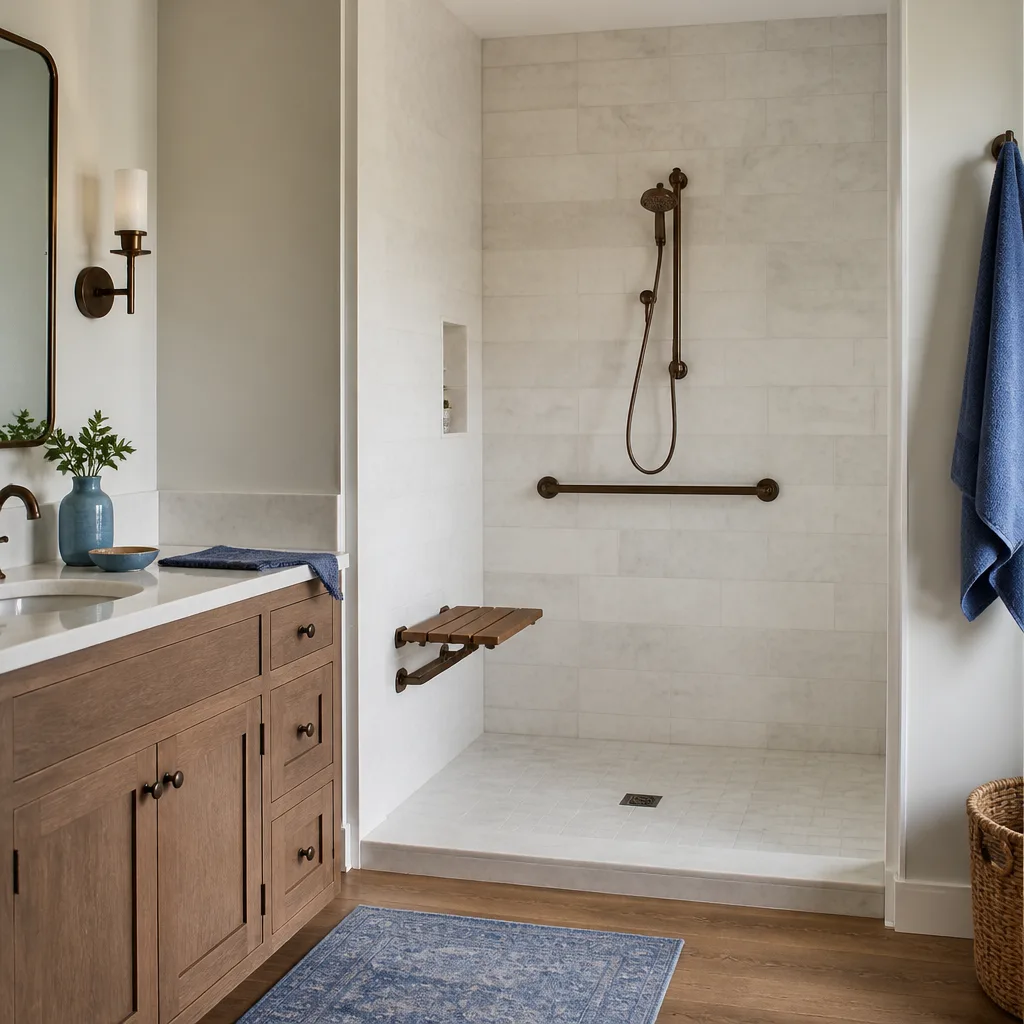
- Walk-in shower
- Tub-to-shower
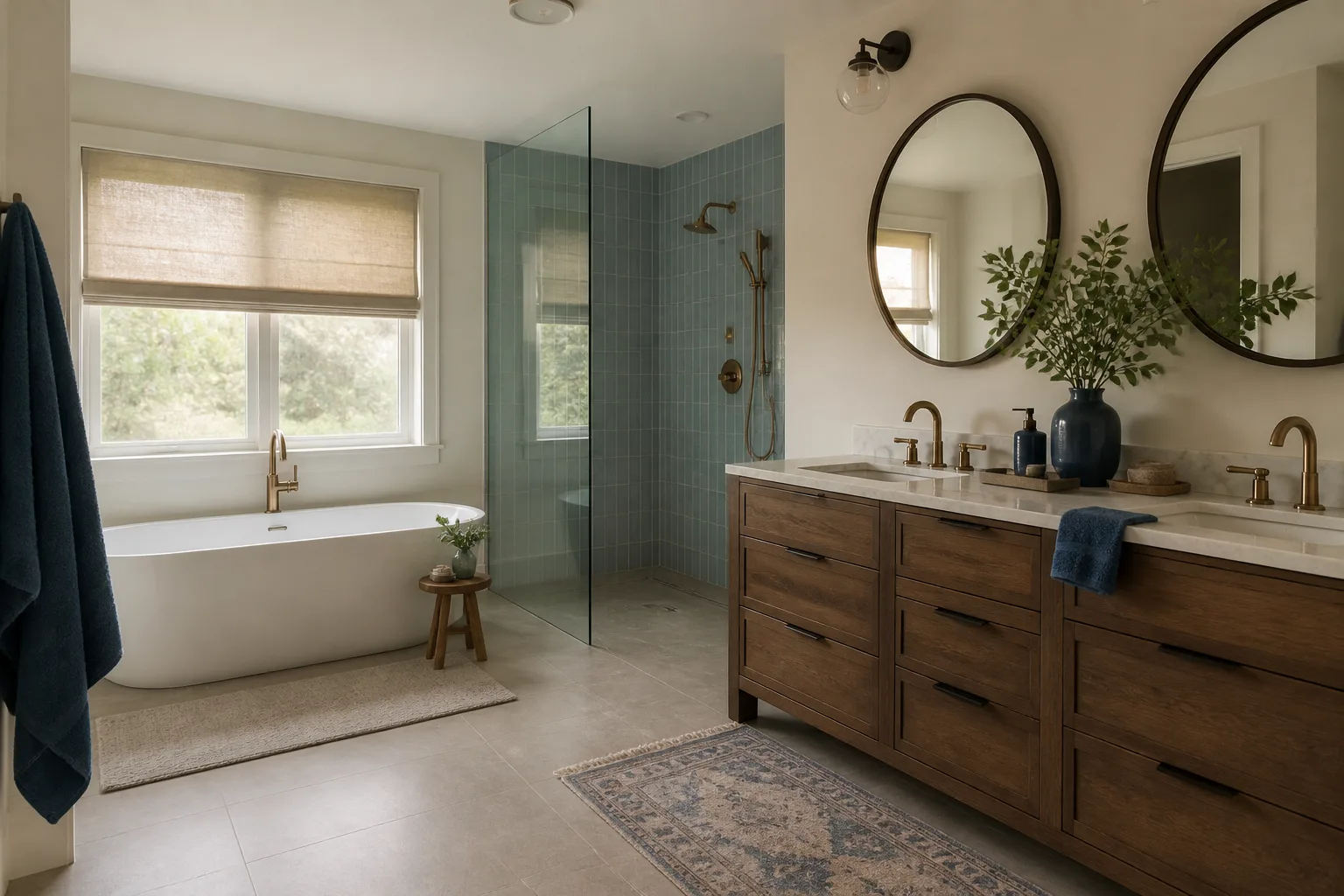
- Freestanding tub
- Kohler
- Moen
- Delta
- Frameless glass
Table of Contents
- What License Classifications Should You Verify?
- How Do You Tell a Bathroom Specialist From a Generalist?
- What Questions Should You Ask Before Hiring?
- How Do You Read a Bathroom Remodeling Quote?
- Why Is the Lowest Bid Usually the Most Expensive?
- What Red Flags Are Unique to the Las Vegas Valley?
- What Should a Realistic Timeline Look Like?
- What Are the Final Steps Before You Sign?
What License Classifications Should You Verify?
Before any bathroom contractor sets foot in your home, verify their license through the Nevada State Contractors Board. Nevada classifies contractors by the type and scope of work they’re allowed to perform, and a bathroom remodel touches several of those categories at once. A general building license (B-2) permits a broad range of construction, which is why so many companies hold one. But holding a B-2 doesn’t mean the company has completed bathroom projects or understands the waterproofing details that make or break a shower.
When you check a license, look for three things:
- Active status. Confirm the license is current and in good standing, not suspended or expired.
- Classification matching the work. A full bathroom remodel involves plumbing, electrical, tile, and sometimes structural changes. Ask which classification covers the scope you’re planning and whether the contractor will pull the permits under their own license.
- Qualified individual on record. Nevada requires a licensed qualifier tied to the company. Ask who that is and whether they’ll be involved in your project.
The board’s public database is free to search, and it takes ten minutes. Do it before you invite anyone over. A contractor who hesitates to give you their license number, or who says “we’re licensed” without pointing you to the lookup, is telling you something. If you’re comparing companies for a full remodel, start with a specialist who can walk you through the bathroom remodeling process from permit to punch list.
How Do You Tell a Bathroom Specialist From a Generalist?
A bathroom is one of the smallest rooms in a house and one of the most technically demanding. It’s small, but it holds plumbing supply and drain lines, electrical circuits that must be GFCI-protected, ventilation that must actually move moisture out, waterproofing that must hold, and tile work that has to sit flat over a properly prepared substrate. A contractor who builds bathrooms every day has solved these problems hundreds of times. A generalist who remodels kitchens, decks, and the occasional bathroom is solving them for the first or second time on your dime.
Here’s how to tell the difference in a first conversation:
- Ask how many bathrooms they completed in the last year. A specialist answers with a number without pausing. A generalist gets vague.
- Ask what waterproofing system they use. Listen for a brand name. Schluter Systems, for example, is a professional-grade membrane system. A contractor who says “we use cement board and RedGard” may be fine, but one who can’t name a system probably hasn’t thought hard about it.
- Ask about fixture sourcing. Specialists work with a set list of brands across price tiers. We spec Kohler, Moen, Delta, American Standard, Toto, Grohe, Schluter, and Sterling, which means we can match any budget without steering you toward whatever happens to be in stock.
- Ask about tub-to-shower conversions. This is a specific skill set, not a variation on a standard remodel. If the answer is “sure, we can do that,” ask how they handle the drain relocation and the waterproofing where the tub used to be.
In Spring Valley, the housing stock spans several decades, and many homes still have original tub-and-tile surrounds. A specialist understands the conversion trade-offs between a walk in shower and a tub replacement in that specific context.
What Questions Should You Ask Before Hiring?
The interview is where you learn whether the contractor in front of you has actually done this work or just marketed it. Ask these questions and listen for specifics, not reassurances. A good contractor welcomes them because they filter out the customers who would have been a bad fit anyway.
- “Will you pull the permits, and will they be in your name?” A bathroom remodel that moves plumbing or adds electrical circuits almost always requires a permit. A contractor who suggests skipping it to “save time” is transferring risk to you.
- “Who will be on site day to day?” You want to know whether the person you’re talking to will be there or whether the job gets handed to a rotating crew.
- “Do you use subcontractors for plumbing and electrical?” Some do, and that’s normal. What matters is whether those subs are licensed and whether the contractor manages them or leaves you to coordinate.
- “What’s your process for waterproofing the shower?” This is the single most important technical question. A vague answer is a warning.
- “Can I see a written line-item quote?” Not a lump sum. Line items.
- “What’s not included in this price?” Every quote has exclusions. You want them in writing before you sign, not after demolition reveals something.
Compare answers across at least three contractors. The one whose answers are specific and consistent is the one to keep talking to. If you’re also weighing whether a smaller refresh or a full gut is right for your space, our guide to Bathroom Remodeling Spring Valley covers the scope decisions that come before the hiring conversation.
How Do You Read a Bathroom Remodeling Quote?
A bathroom quote should read like a plan, not a summary. If you can’t tell from the document what’s being torn out, what’s being installed, and who’s responsible for what, you don’t have a quote. You have a number. The vague quote is the one that grows after demolition starts, and the homeowner who signed it has no leverage to push back.
Here’s what a line-item quote should break down:
- Demolition and disposal. Includes hauling away the old tub, tile, vanity, and fixtures.
- Rough plumbing and electrical. What’s being moved, what’s being added, and whether permits and inspections are included.
- Waterproofing. The specific system and substrate preparation. If this line is missing or bundled into “tile work,” ask why.
- Tile and finishes. Square footage, tile type or allowance, and setting materials.
- Fixtures and brands. Which brand and model tier is being installed. “Faucet” without a brand is a blank check.
- Labor by phase. Not just a total. You want to see where the money goes.
- Exclusions and allowances. Anything not included, and the allowance for items you’ll choose later.
Read it twice. The first time to understand the scope, the second to find what’s missing. If waterproofing isn’t its own line, if permits aren’t mentioned, or if the fixtures are brandless, ask. A contractor who can explain every line earns trust. One who gets defensive hasn’t earned the job.
Why Is the Lowest Bid Usually the Most Expensive?
The lowest bid wins the job because it’s the easiest to sign. It rarely wins the bathroom. In a Spring Valley bathroom remodel, the cheapest quote is usually the one that cut corners in places you can’t see until they fail, and the cost of fixing those failures typically exceeds the savings from the original bid.
Here’s where the savings come from when a bid comes in low:
- Cheaper waterproofing. A membrane system like Schluter costs more than a paint-on alternative. The savings show up six months to two years later as a leak into the room below.
- Lower-tier fixtures. A Grohe or Kohler fixture costs more than a builder-grade equivalent. The low bid installs the builder-grade option and doesn’t tell you there was a choice.
- Unlicensed or thin subcontractor pools. The contractor who bids low often sources the cheapest subs, which means the plumber and the tile setter may be working to different standards.
- Permits skipped or absorbed incorrectly. A bid that doesn’t include permit fees either skips the permit or plans to surprise you with the cost later.
- Scope excluded. “Tile work” in one bid and “tile, substrate, waterproofing, and setting materials” in another are not the same quote.
The reliable comparison isn’t the bottom line. It’s whether each bid covers the same scope, the same waterproofing standard, and the same fixture tiers. When two bids are $3,000 apart but only one includes a proper membrane system and licensed subs, the real difference is larger than the number suggests. Ask every contractor to itemize to the same standard before you compare.
What Red Flags Are Unique to the Las Vegas Valley?
The Las Vegas Valley’s construction market moves fast and has attracted its share of operators who follow the boom. Some of the patterns below are common across the country, but they show up with particular frequency here, especially when demand outpaces the supply of local, licensed, bathroom-focused contractors.
- Out-of-state crews. During busy periods, contractors from other states move in for a season. Ask where the company is licensed and where the crew is based. A company that can’t clearly explain its Nevada license status is one to pass on.
- Storm-chaser patterns. The “we’re in your neighborhood today” pitch, the pressure to sign before the price changes, the discount that expires tonight. None of it belongs in a planned bathroom remodel.
- Permit-avoidance language. “You don’t need a permit for that” is a red flag on any scope that touches plumbing or electrical. Permits protect you, not the contractor.
- Vague scope that expands. The quote that says “bathroom remodel” without line items is designed to allow change orders once demolition starts.
- No physical address or verifiable license. Every legitimate contractor should have both, and both should check out with the state board.
- Cash-only or large deposits upfront. A bathroom remodel requires materials, but a large deposit before work begins is a risk. Standard practice involves progress payments tied to completed phases.
Spring Valley’s mix of established neighborhoods and newer builds means the housing stock varies widely, and contractors who know the local permitting process have an edge. If you’re looking for a contractor who knows the Spring Valley market specifically, ask how familiar they are with the local building department’s process.
What Should a Realistic Timeline Look Like?
A full bathroom remodel in Spring Valley typically takes several weeks from demolition to final inspection, and any contractor who promises a much shorter window without explaining how is either cutting scope or planning to skip steps. The timeline depends on the size of the bathroom, the scope of the work, and whether the fixtures and tile are in stock or special order.
A realistic phase-by-phase breakdown:
- Design and selection. Fixtures, tile, and layout decisions need to be locked before demolition, or the job stalls waiting on materials.
- Permits. Pulling the permit takes time depending on the scope and the local building department’s workload.
- Demolition and rough-in. Tear-out, plumbing, electrical, and inspections. This phase often reveals surprises behind the walls, so a good contractor builds a buffer here.
- Waterproofing and tile. The most technically important phase. It should not be rushed.
- Fixtures and finishing. Setting the vanity, toilet, shower fixtures, and trim.
- Final inspection and punch list. Confirm everything works and the permit is closed.
Ask each contractor for a written schedule with phases, and ask what happens if a phase runs long. A tub-to-shower conversion often takes longer than a simple fixture swap because the drain has to move and the waterproofing has to be rebuilt. The time savings come from doing it right the first time, not from compressing the schedule.
What Are the Final Steps Before You Sign?
You’ve checked the license, interviewed three contractors, read the quotes line by line, and asked about waterproofing. The final steps are the ones that protect you after the work is done. They’re not glamorous, but a contractor who handles them without friction is the one you want.
Before signing, confirm the following in writing:
- Written contract with scope and line items. Matches the quote you compared. No handshake additions.
- Permit responsibility. Who pulls the permit, and who’s listed as the responsible party. It should be the licensed contractor.
- Payment schedule tied to phases. Progress payments as work is completed, not large deposits upfront.
- Change order process. How changes are priced and approved in writing before work continues.
- Workmanship terms. Whatever the contractor offers, in writing. Ask specifically about waterproofing and tile work.
- Final inspection and punch list. The job isn’t done until the permit is closed and the punch list is cleared.
Confirm the license one more time on the state board’s site on the day you sign, and make sure the contract names the same licensed entity. If a company has been in business since 2016 and carries a clean license history, that’s a useful signal. So is a contractor who specializes in bathrooms and only bathrooms.
Common Mistakes to Avoid
- Hiring on the lowest bid alone. The lowest quote usually gets there by cutting waterproofing or fixtures, and the repair cost exceeds the savings. Compare scope, not bottom line.
- Skipping the license lookup. Nevada’s contractor board database is free. A contractor who discourages you from checking is one to skip.
- Accepting a lump-sum quote. A quote without line items gives you no way to see what’s covered, and no leverage when something goes wrong.
- Ignoring waterproofing details. The shower you can see is fine on day one. The waterproofing you can’t see is what determines whether it’s fine in year five. Ask for the system name.
- Not confirming permits. A bathroom remodel that touches plumbing or electrical needs a permit. A contractor who offers to skip it is transferring risk to you.
- Choosing a generalist for a technical room. A contractor who does bathrooms every day solves the same problems repeatedly. A generalist solves them for the first time on your job.
- Signing before the timeline is in writing. A realistic phase schedule with buffer time is a sign of experience. A compressed timeline with no explanation is a sign of a sales pitch.
See the difference
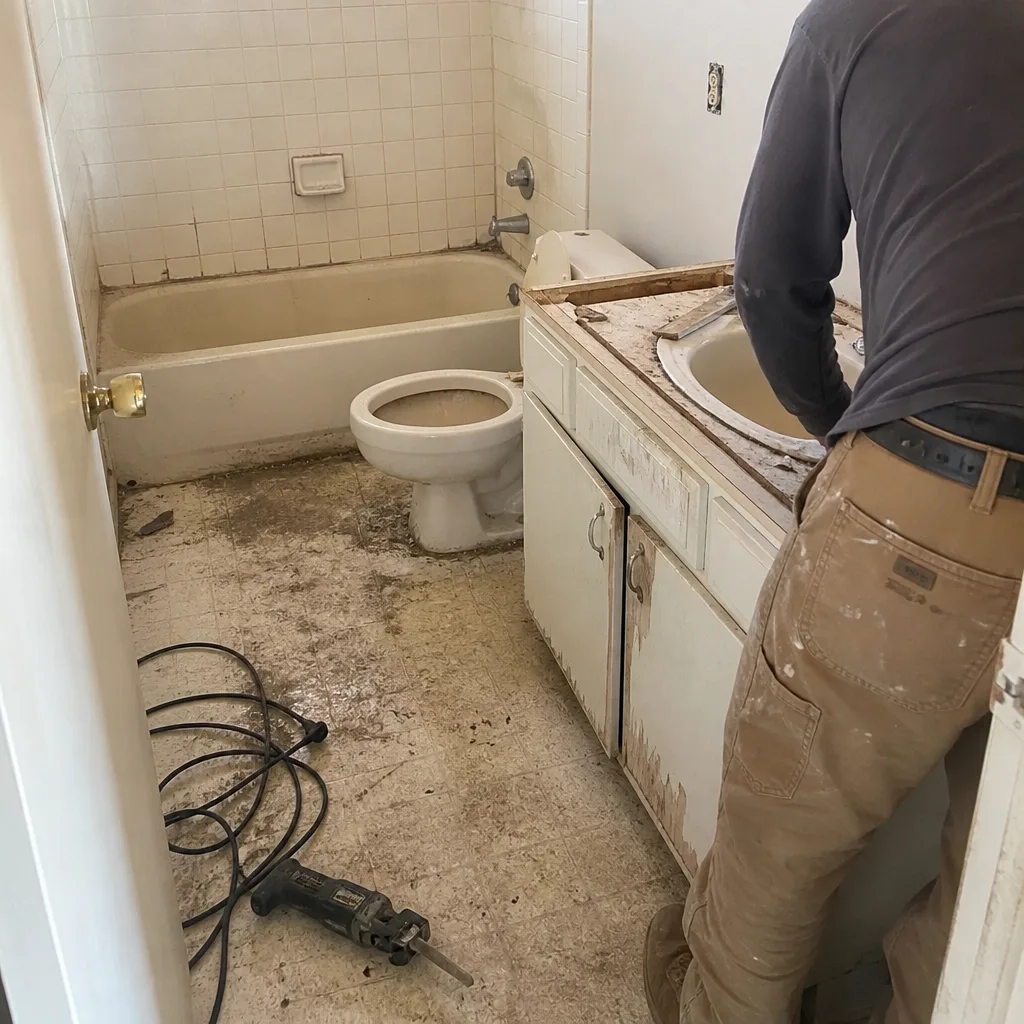 Before
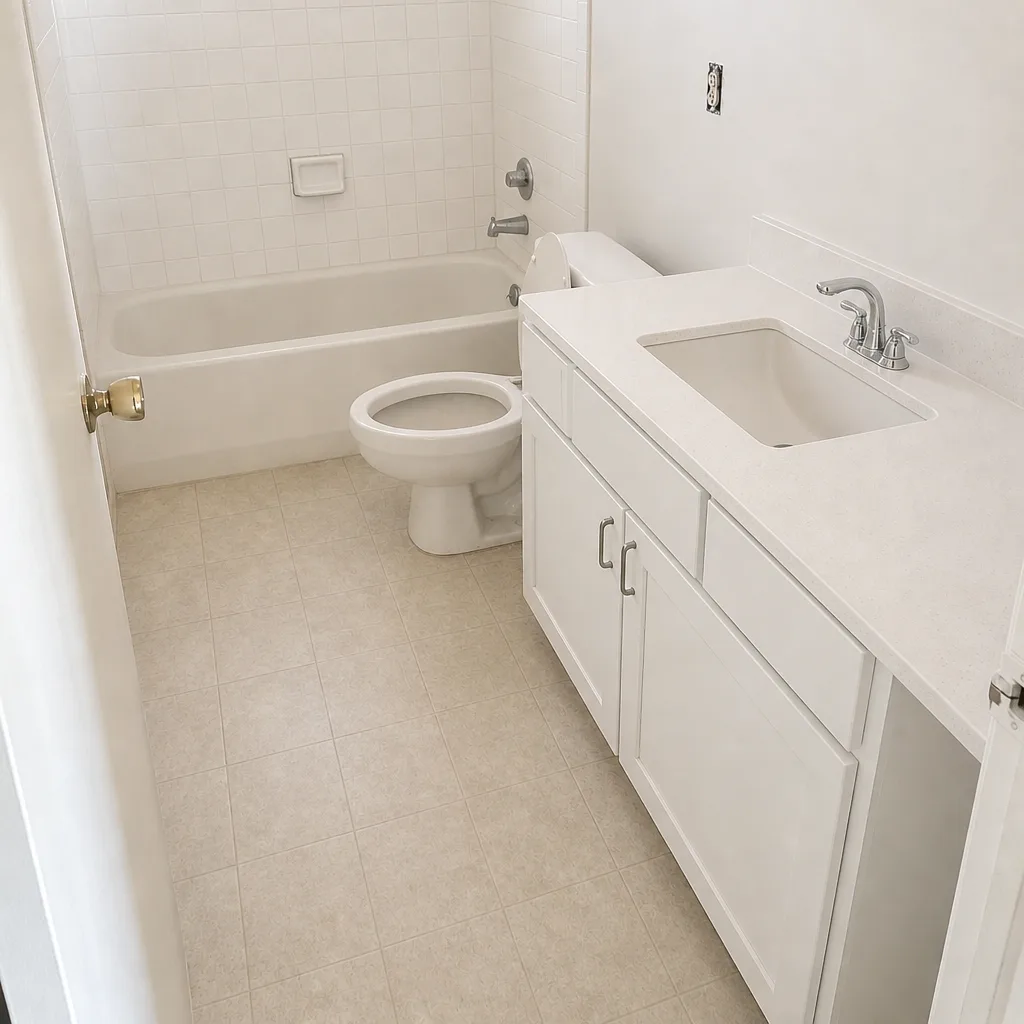 After
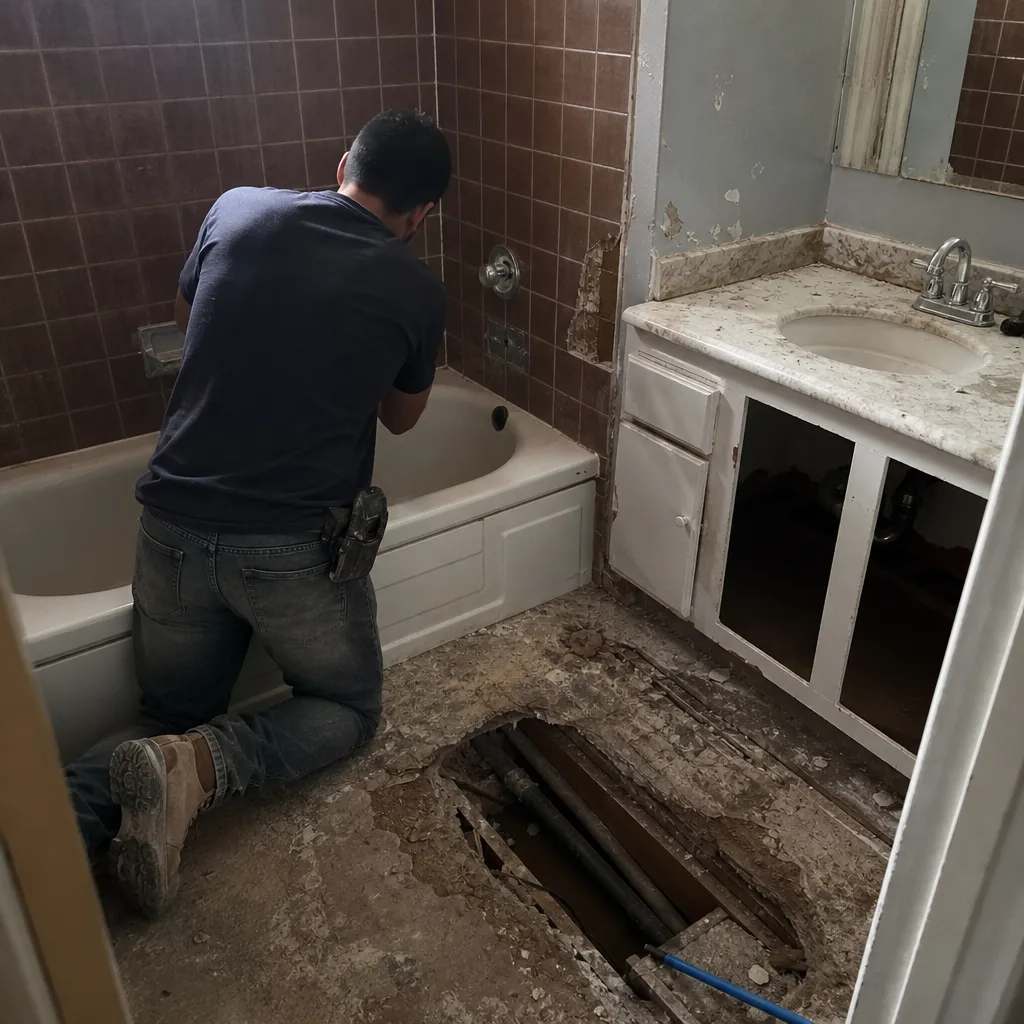 Before
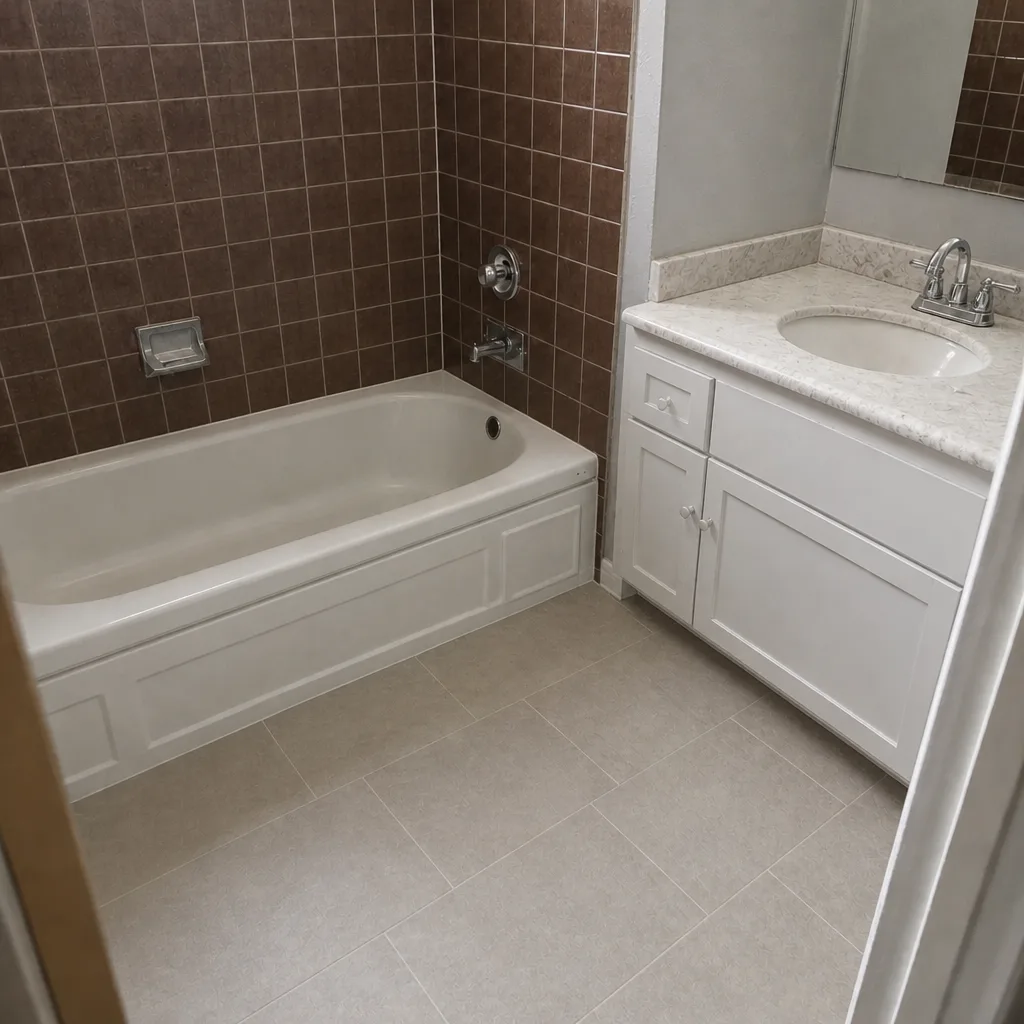 After
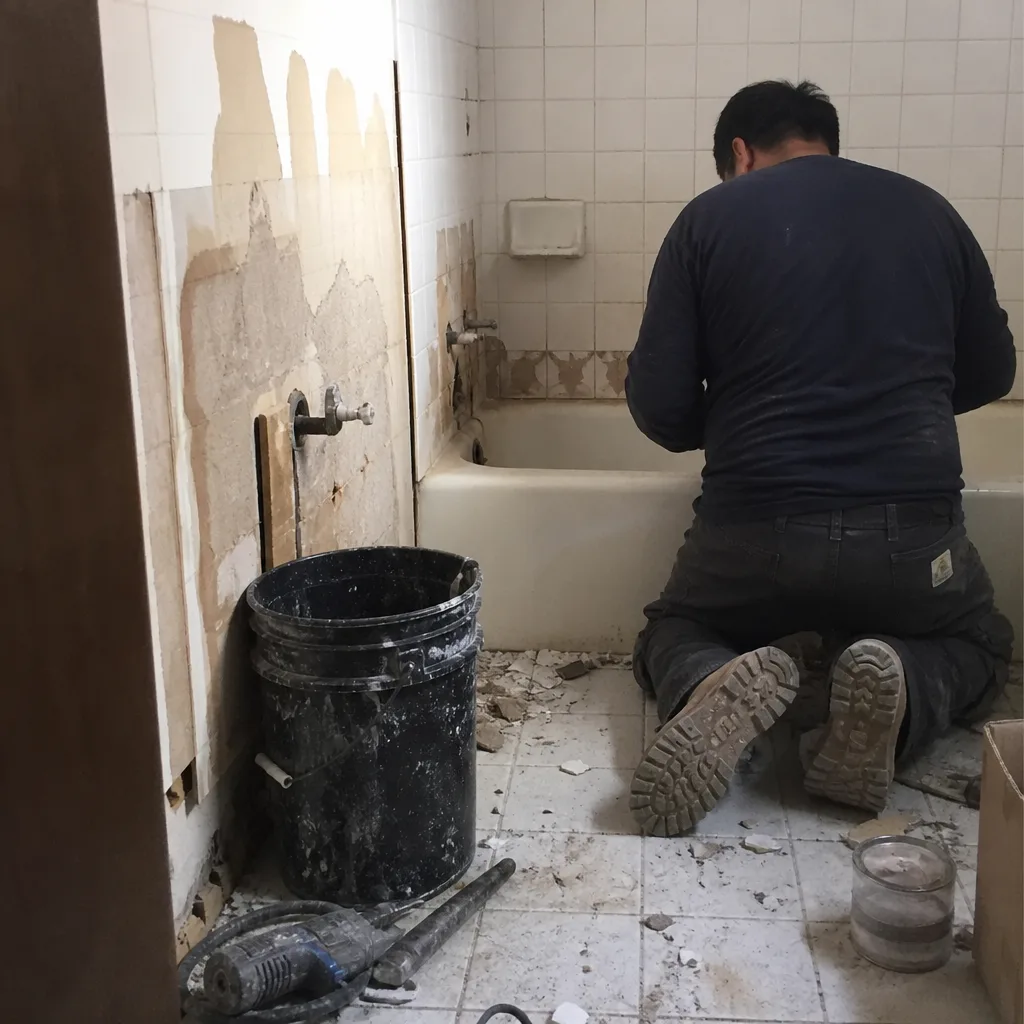 Before
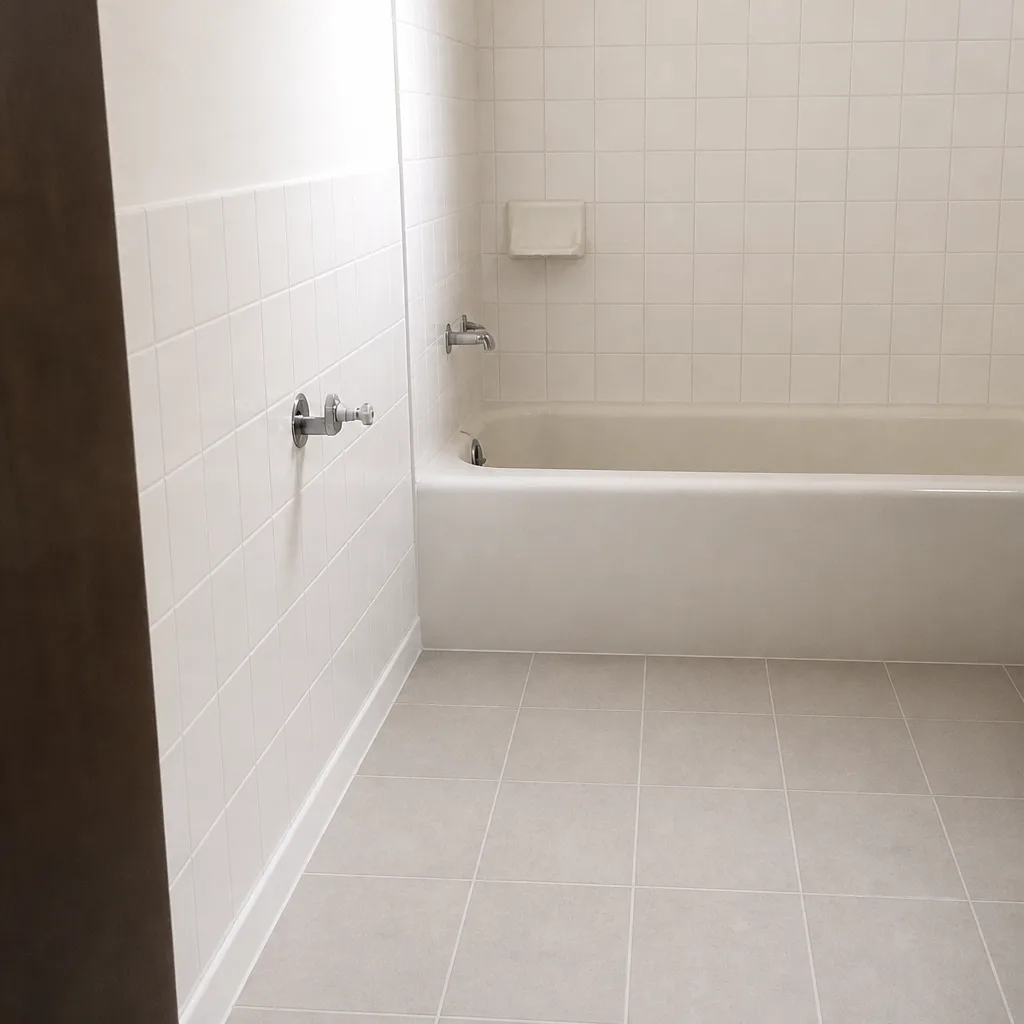 After
When to Call a Professional
A bathroom that’s dated but functional can wait. A bathroom with a slow leak into the floor below, a shower that’s losing grout and showing moisture behind the tile, a tub that’s become unsafe to step into, or a layout that no longer works for your household needs is a different situation. Water damage compounds, and the cost to repair it grows the longer the source stays in place. The same is true of a bathroom that has been patched repeatedly rather than properly rebuilt. If you’re planning a tub-to-shower conversion for accessibility, that’s also work that benefits from a specialist who handles the waterproofing and drain relocation correctly the first time. Bathroom Remodeling Spring Valley offers free estimates in Spring Valley – call (844) 312-0122. We answer 24/7. Fast dispatch from 7am to 7pm, Sunday through Friday. Our technicians have up to 10 years of experience.
Frequently Asked Questions
Most bathroom remodels in Spring Valley require a permit when they involve plumbing changes, new electrical circuits, or structural work. The simplest fixture swap may not. Ask your contractor to confirm the permit scope with the local building department before work begins, and make sure the permit is pulled in the contractor’s licensed name. Call (844) 312-0122 for an exact quote on your project – estimates are free.
Costs in Spring Valley depend on the scope, the fixture tier, and whether the layout changes. A simple refresh with new fixtures and tile sits at the lower end; a full gut with relocated plumbing and premium fixtures sits at the top. The written line-item estimate sets the final price, so ask for one before you sign. Call (844) 312-0122 for an exact quote – estimates are free.
Ask how many bathrooms they completed in the last year, what waterproofing system they use, and which fixture brands they work with. A specialist answers with specifics. A generalist gets vague. Our team works in bathrooms every day, which means the answers are the same on the first call as they are on the last. Call (844) 312-0122 to schedule your free estimate.
The lowest bid gets there by cutting waterproofing, using lower-tier fixtures, or excluding scope that other bids include. The savings show up front; the repair cost shows up later. Compare quotes line by line and make sure every contractor is pricing the same scope. Call (844) 312-0122 for an exact quote – estimates are free.
A full bathroom remodel in Spring Valley typically takes several weeks from demolition to final inspection, depending on scope and material lead times. A tub-to-shower conversion can take longer because the drain moves and the waterproofing has to be rebuilt. Ask for a phase-by-phase schedule in writing before signing.
It shouldn’t if the scope was priced correctly and the quote was line-itemized. Surprises behind the walls can require a change order, but those should be priced and approved in writing before work continues. A contractor who quotes a clear scope and explains exclusions upfront is the one worth hiring. Call (844) 312-0122 for an exact quote – estimates are free.
The Bottom Line
Hiring a bathroom remodeling contractor in Spring Valley comes down to three filters: verify the license and classification with the Nevada State Contractors Board, confirm the contractor specializes in bathrooms rather than treating them as a side job, and read the quote line by line to make sure waterproofing, fixtures, and permits are spelled out. The lowest bid is usually the one that skipped the details. The right bid is the one that priced them. Work through these steps before you sign, and you’ll end up with a bathroom that holds up for the long haul instead of one that looks good on day one and leaks by year two. Bathroom Remodeling Spring Valley works with Kohler, Moen, Delta, American Standard, Toto, Grohe, Schluter, and Sterling to match any budget and any design vision. Call (844) 312-0122 for a free estimate. We answer 24/7. Fast dispatch from 7am to 7pm, Sunday through Friday.
Written by the team at Bathroom Remodeling Spring Valley.